Sri Lanka Travel Safety Tips for 2026
Is Sri Lanka safe? Common scams, emergency numbers, health, roads, beaches and wildlife: the practical safety guide for your 2026 trip.
Sri Lanka welcomed a record 2.36 million visitors in 2025, and the vast majority had a trouble-free trip. Violent crime against tourists is rare. The real risks are more ordinary: overcharging, traffic, strong surf, heat and mosquitoes. This guide covers each one, with the numbers and habits that actually help.
The short version: Save 119 (police) and 1990 (ambulance), use ride-hailing apps for tuk-tuks, swim only where locals swim, cover up against mosquitoes, and keep your passport in the hotel safe.
Before You Go
- Visa (ETA): Since 25 May 2026, citizens of 40 countries get a free 30-day tourist ETA; everyone else pays a fee. Apply only on the official site, eta.gov.lk. Look-alike sites charge extra for the same document.
- Passport: Valid for at least six months after arrival.
- Travel insurance: Get a policy that covers medical evacuation, plus surfing, diving or hiking if you plan to do them.
- Vaccines: See a travel clinic four to six weeks before you leave. Hepatitis A, typhoid and an up-to-date tetanus shot are the usual advice. Rabies and Japanese encephalitis vaccines are worth considering for long or rural trips.
- Plugs: Type D, G and M, at 230 V.
Landing soon? Follow our first 24 hours guide from the airport to your hotel.
Common Scams and How to Avoid Them
Sri Lankans are famously warm, and most "friendly strangers" are exactly that. A few well-worn scams target tourists, though, and they all follow a pattern you can learn to spot.
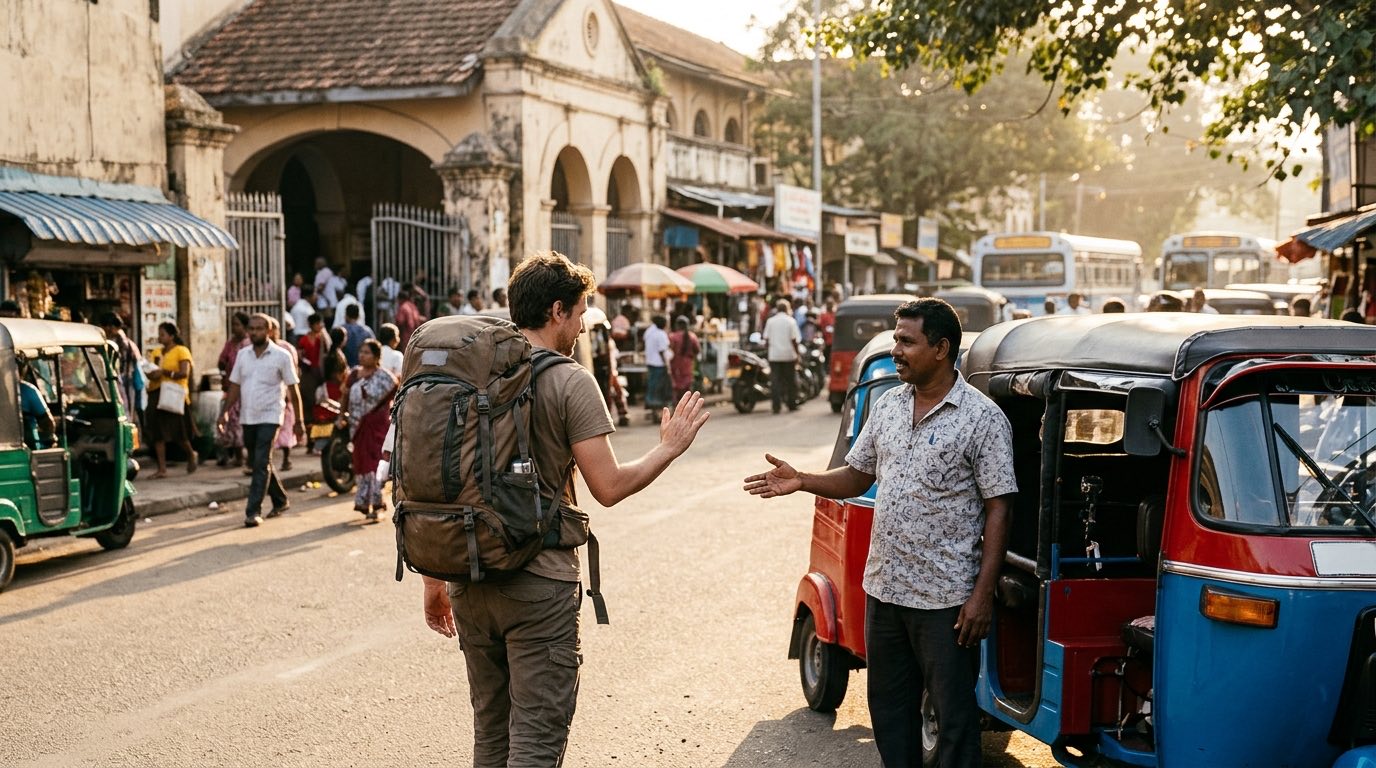
Tuk-tuk overcharging
Drivers waiting outside stations, temples and hotels often quote two to five times the normal fare.
- Book through PickMe or Uber. The fare is shown before you confirm, which removes the haggling.
- If you hail one on the street, agree on the price before you get in, or ask for the meter.
- As a rough guide, metered and app fares run about LKR 100–120 for the first kilometre and LKR 80–100 per kilometre after that. Prices vary by city and time of day, so check the app.
- Carry small notes. "No change" is a common way to keep the extra.
Our tuk-tuk survival guide covers fares and negotiation in detail.
The gem shop detour
A friendly local offers a free ride or tour and "happens" to stop at a friend's gem shop, where the pressure to buy is intense. The stones may be overpriced, treated or fake.
- Decline unsolicited free rides and tours.
- If you want gems, buy from established dealers and get the stone tested. The National Gem and Jewellery Authority runs a testing service in Colombo.
- Never buy on the same day you're pitched.
Unofficial guides
At busy temples and ruins, someone may start explaining the site uninvited and then ask for money at the end. A polite "No thank you, I'm fine on my own" usually works. If you want a guide, hire a licensed one through the ticket office or your hotel, and agree on the price first.
Money exchange tricks
Use banks, the airport counters or licensed exchange bureaus, and count your cash before you leave the counter. Bank ATMs generally give fair rates; check what your own bank charges. The rupee trades at roughly LKR 330 per US dollar (late 2026). Check a live rate before you exchange.
Health
Food and water
- Drink bottled or filtered water. Tap water isn't reliably safe.
- Choose busy places and food cooked fresh in front of you. Kottu and hoppers off a hot griddle are good first street foods.
- Peel fruit yourself, and be careful with raw salads and ice in very small eateries.
- Carry hand sanitiser and oral rehydration salts.
More in our food and water safety guide.
Dengue and mosquitoes
Dengue is present all year and peaks after the monsoon rains. There's no preventive pill, so the protection is not getting bitten:
- Use a repellent with DEET (20–50%) or picaridin, especially at dawn and dusk. The dengue mosquito bites in the daytime.
- Wear long, light clothing in the evening, and sleep under a net or in air-conditioning.
- If you get a high fever with a severe headache, pain behind the eyes or body aches, see a doctor and ask for a dengue test. Take paracetamol only; avoid ibuprofen and aspirin until dengue has been ruled out.
Heat and sun
The sun is strong year-round. Use SPF 30+ sunscreen, wear a hat, plan outdoor sightseeing for the morning and late afternoon, and drink two to three litres of water a day. Dizziness, nausea and a racing heartbeat are early signs of heat exhaustion. Get into the shade and rehydrate.
See our tropical health guide for more on dengue, heat and rabies.
Animals and rabies
Rabies exists in Sri Lanka. Don't touch stray dogs, cats or monkeys. If you're bitten or scratched, wash the wound with soap and water for 15 minutes and get to a hospital the same day for post-exposure vaccination, even if you were vaccinated before your trip.
Roads and Transport
Traffic drives on the left. Roads range from smooth expressways to narrow, winding mountain passes shared with buses, tuk-tuks, dogs and the occasional cow.
- Hire a driver rather than self-driving if you're not used to chaotic traffic. It costs about the same as a rental car plus fuel, and it's far less stressful.
- Self-driving needs a local permit on top of your home licence: either a temporary licence from the Department of Motor Traffic (there's a counter at Colombo airport) or a recognition permit from the AA of Ceylon, which requires a 1949-convention International Driving Permit. Avoid driving at night.
- Scooters: Ride only if you're experienced, always wear a helmet (it's the law), and skip rides in heavy rain.
- Trains are safe and scenic. Book reserved seats in advance for popular routes such as Kandy–Ella.
- Buses are cheap but fast and crowded. Keep your bag on your lap.
- Crossing the road: Traffic rarely stops for pedestrians, even at zebra crossings. Cross with locals when you can.
Our transport safety guide goes deeper on buses, trains and drivers.
Beaches and the Sea
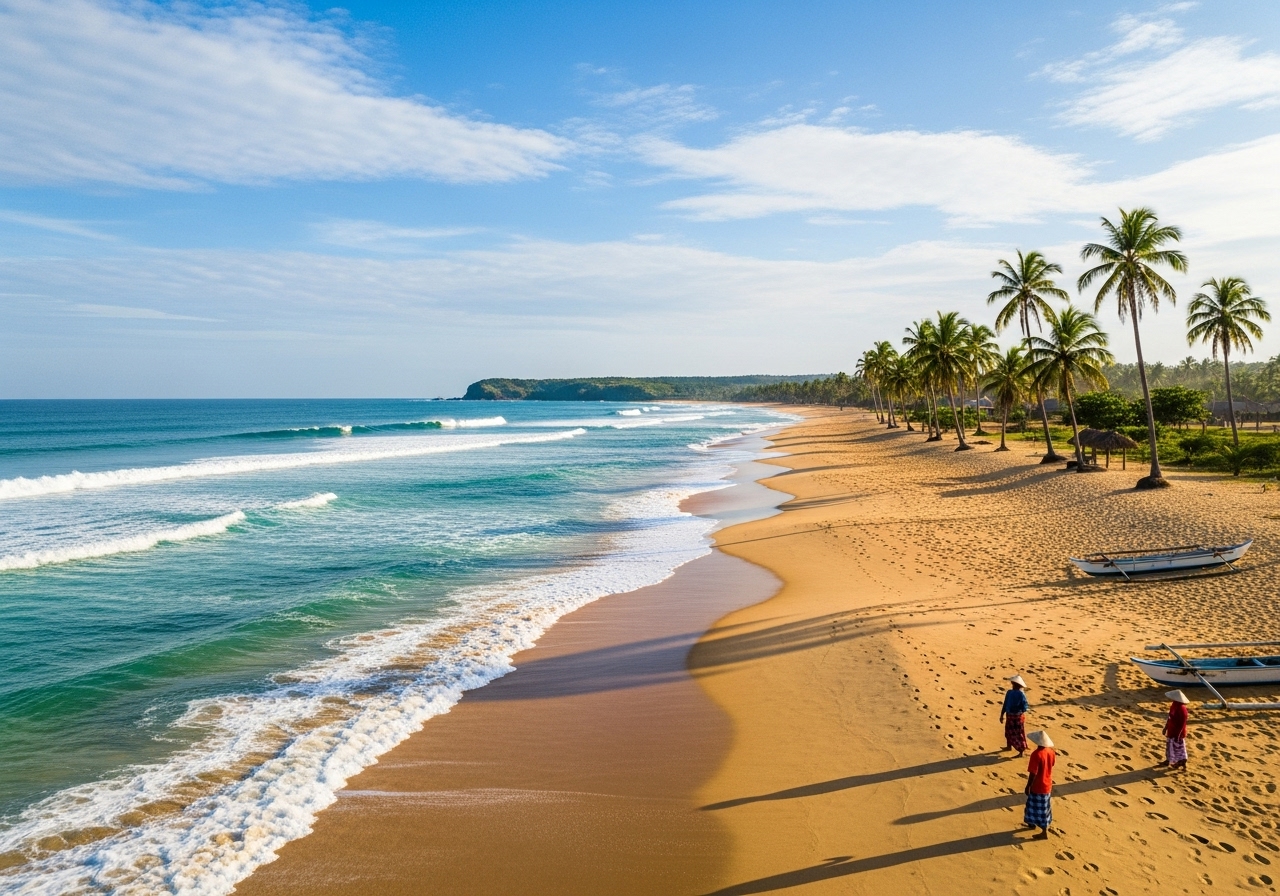
The ocean is the most serious everyday risk for visitors. Drownings happen every year, usually when the sea is rough.
- Swim at beaches with lifeguards or where locals swim, and never alone or after drinking.
- Know which coast is in season. The south and west coasts are calmest from December to April; the east coast from May to September.
- Caught in a rip current? Don't swim against it. Float, swim parallel to the shore until the pull stops, then head back in at an angle. Raise an arm and shout if you need help.
- Wear water shoes on rocky entries (sea urchins), and never stand on coral.
For flags, jellyfish and which beaches to choose, read our beach safety guide.
Wildlife
- Elephants: Keep at least 50 metres away, stay in the vehicle on safari, and never feed them, including at roadside stalls near parks. If one approaches on the road, stop, stay calm and give it space to pass.
- Monkeys: They steal food, phones and sunglasses. Don't feed them, keep bags zipped and balcony doors shut, and let go if one grabs something.
- Snakes: Bites are rare for tourists. Wear closed shoes on trails and use a torch at night. If bitten, keep still, keep the limb immobile and get to a hospital immediately. Don't cut, suck or apply ice.
- Crocodiles: Live in some lagoons and rivers. Don't swim in fresh water unless locals say it's safe.
Our wildlife safety guide explains what to do if an elephant blocks the road.
Weather and Natural Hazards
Sri Lanka has two monsoons that hit different coasts:
| Season | Months | Wettest areas |
|---|---|---|
| Southwest monsoon | May – September | South and west coasts, hill country |
| Inter-monsoon | October – November | Thunderstorms across the island |
| Northeast monsoon | December – February | North and east coasts |
During heavy rain, expect flooding and road delays, and avoid steep hikes in the hill country, where landslides happen. Watch the Department of Meteorology's forecasts and follow local warnings.
Tsunami signs: a strong earthquake, the sea suddenly pulling back, or a loud roar from the ocean. Head inland or to high ground immediately without waiting for an official alert, and don't return until authorities give the all-clear.
Our weather and packing guide explains where to go in each month.
Culture and Respect
Following local customs keeps you out of trouble and makes you welcome.
- Temples: Cover your shoulders and knees, and remove your shoes and hat. Carry a sarong or scarf.
- Buddha images: Never pose with your back to a Buddha statue, and don't point your feet at it. Tattoos of the Buddha can get you refused entry, or even deported.
- People: Ask before photographing monks, women and children. Women should not touch monks or hand them things directly.
- Hands: Use your right hand to eat, give and receive.
- Affection: Keep public displays to holding hands.
- No-photo zones: Military sites, and some temple interiors.
For dress codes, Poya days, drones and other rules, read our temple etiquette and local laws guide.
Women Travelling Solo
Many women travel Sri Lanka alone and love it. Staring and unwanted comments are the most common problem, and serious incidents are uncommon. Dress modestly away from the beach, book well-reviewed places to stay, use apps or hotel-arranged drivers after dark, and be firm with anyone who won't take no for an answer.
Our solo female travel guide has detailed advice.
Money and Documents
- Carry only the cash you need that day, and keep the rest, plus your passport, in the hotel safe. Carry a photocopy or a phone photo of your passport.
- Use ATMs inside or attached to banks, and cover your PIN.
- Cards work in hotels, larger restaurants and supermarkets. Small shops, tuk-tuks and buses are cash-only.
- Keep photos of your passport, visa and insurance in cloud storage.
- If your passport is stolen, report it to the police (you'll need the report) and contact your embassy in Colombo.
Staying Connected
A local SIM or eSIM from Dialog, SLT-Mobitel or Hutch is cheap and gives you maps, ride apps and emergency calls everywhere. Download offline maps and the Sinhala and Tamil packs for Google Translate. On public Wi-Fi, use a VPN or your own data for banking.
Staying longer and working remotely? See our south coast guide for digital nomads.
Emergency Numbers
Save these before you need them:
| Service | Number |
|---|---|
| Police emergency | 119 |
| Ambulance (Suwa Seriya, free) | 1990 |
| Tourist hotline (SLTDA, 24/7) | 1912 |
| Tourist Police (Colombo) | 011 242 1052 |
| Fire and rescue | 110 (some sources list 111) |
| Disaster Management Centre | 117 |
1912 works from any phone in Sri Lanka and can connect you to the Tourist Police for complaints about scams or harassment.
Hospitals: For anything serious, private hospitals are the usual choice for visitors. In Colombo these include Lanka Hospitals, Nawaloka, Asiri and Durdans; Kandy and Galle also have Asiri branches. Public teaching hospitals, such as Karapitiya in Galle and Kandy National Hospital, are free and handle emergencies well, but expect queues.
Our emergency preparedness guide has a full checklist.
Final Word
Sri Lanka is a friendly, rewarding and safe country for travellers who take ordinary precautions. Book transport through apps, respect the sea and the sun, cover up against mosquitoes and at temples, and keep your emergency numbers handy. The Sri Lanka Safe app keeps fair fares, scam alerts and emergency contacts in one place, and works offline.
Travel Sri Lanka with Sri Lanka Safe
Fair tuk-tuk prices, scam alerts, offline emergency contacts and AI trip planning, in one free app.