Best Time to Visit Sri Lanka: Weather Guide
Sri Lanka's two monsoons explained: where the sun shines each month, when to visit each coast, flood and landslide safety, and what to pack.
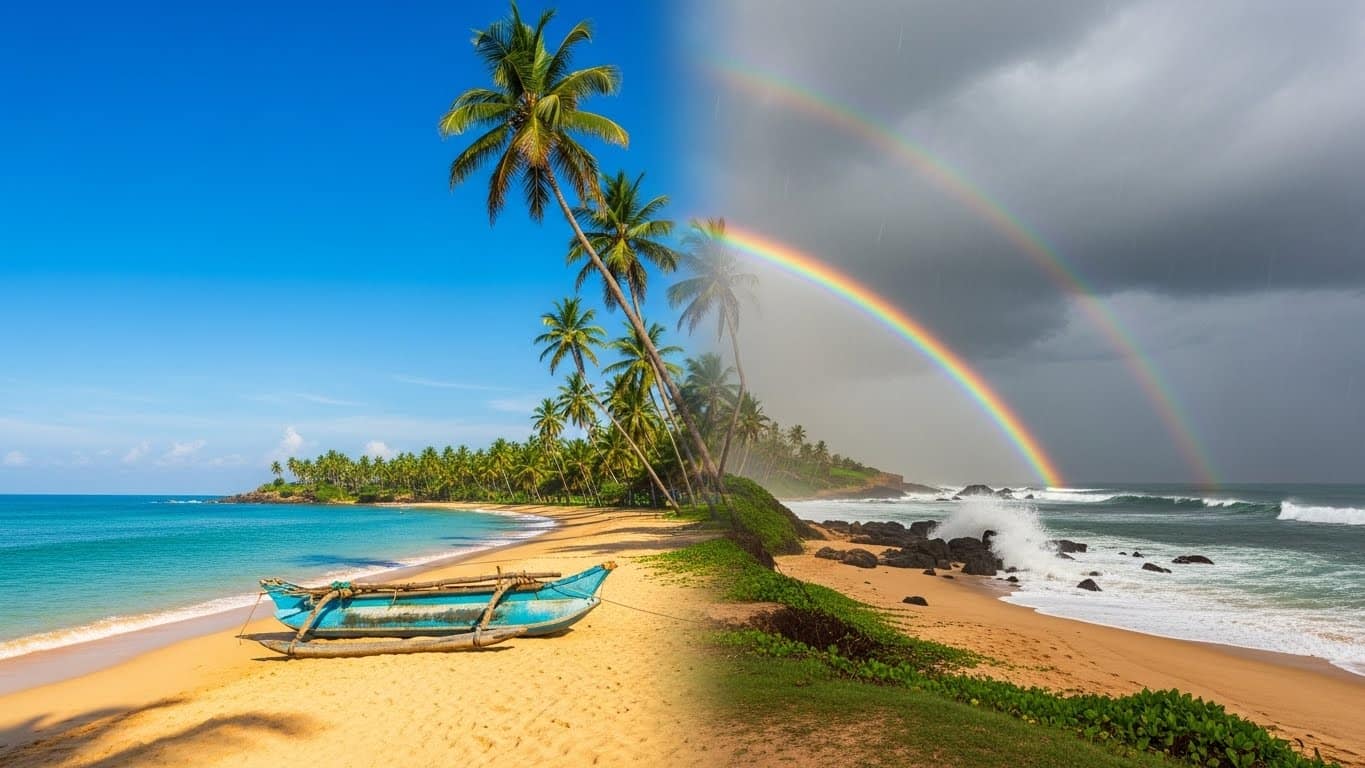
Sri Lanka has two monsoons, and they hit opposite sides of the island at different times of the year. That's good news: in almost every month, some part of the island has good weather. The trick is knowing where to go when.
At a Glance
- South and west coasts (Galle, Mirissa, Hikkaduwa, Bentota): best December to April
- East coast (Trincomalee, Pasikudah, Arugam Bay): best May to September
- Hill country (Kandy, Nuwara Eliya, Ella): driest January to April; cool all year
- Cultural Triangle (Sigiriya, Dambulla, Polonnaruwa): good most of the year; wettest October to January
- Wettest island-wide: the October–November inter-monsoon, with thunderstorms almost everywhere
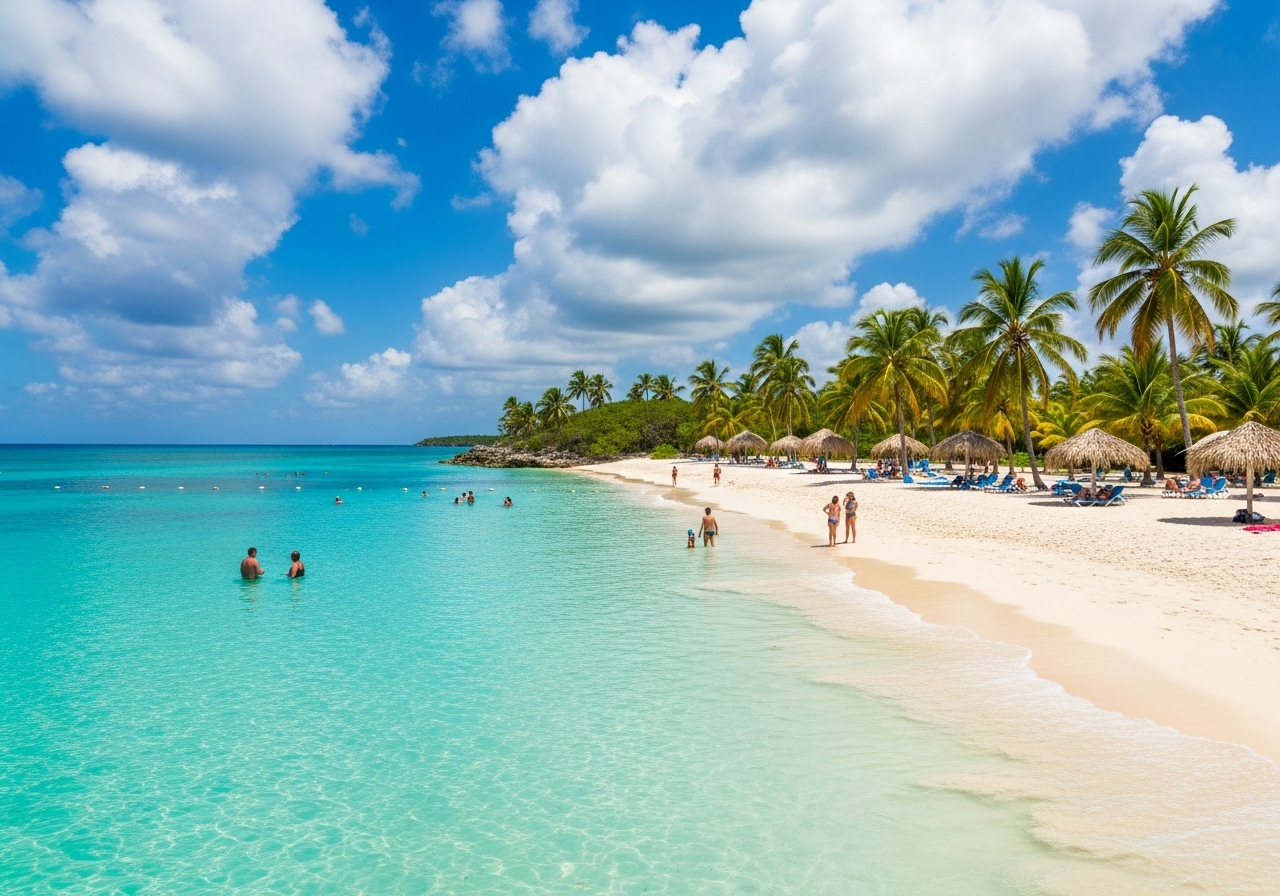
Calm turquoise water and palm trees on a south coast beach in the dry season
How the Seasons Work
The Department of Meteorology divides the year into four seasons:
| Season | Months | What happens |
|---|---|---|
| First inter-monsoon | March – April | Hot and humid, with afternoon thunderstorms |
| Southwest monsoon ("Yala") | May – September | Rain on the south and west coasts and in the hills; the east is dry |
| Second inter-monsoon | October – November | Heavy storms across the island; cyclone risk |
| Northeast monsoon ("Maha") | December – February | Rain in the north and east; the south and west are dry |
Monsoon rain rarely falls all day. More often it comes as heavy showers with sunny spells in between, and the landscape is at its greenest.
Region by Region
South and west coasts
From December to April, expect calm seas, sunshine and around 28–32°C. This is peak beach season, and it's whale-watching season in Mirissa (roughly November to April, best December to March).
From May to September, the southwest monsoon brings rough seas, red flags on the beaches and frequent showers. Swimming is often dangerous, but Galle Fort, the cafés and the cultural sites are still very enjoyable, and prices drop.
East coast
From May to September, Trincomalee, Nilaveli and Pasikudah have calm, clear water, while Arugam Bay has its main surf season. Whales and dolphins can be seen off Trincomalee in this period too.
From November to February, the northeast monsoon brings heavy rain and rough seas, and many east-coast guesthouses close for the season.
Hill country
At 500 to over 1,800 metres, the hills are cooler: around 15–20°C by day in Nuwara Eliya (it can drop near freezing on clear nights in January and February), and 20–27°C in Kandy and Ella. The hills get rain from both monsoons. January to April is driest and clearest for views and hikes.
The Adam's Peak (Sri Pada) pilgrimage season runs from December to May, when the path is lit and the weather is most reliable for the night climb.
Cultural Triangle
The dry zone around Sigiriya, Dambulla, Anuradhapura and Polonnaruwa has its main rains from October to January. From May to September it's dry and hot (often 32–35°C), so climb Sigiriya early in the morning. Minneriya and Kaudulla host the famous elephant "gathering" in the dry season, roughly July to October.
National parks
- Yala: Blocks 1 and 2, the busiest, usually close for several weeks between mid-September and mid-October for the dry season (in 2026: 14 September to 15 October). Other blocks may stay open. Check with the Department of Wildlife Conservation or your safari operator.
- Udawalawe: Open all year, with reliable elephant sightings.
- Wilpattu: Best from February to October.
Planning a climb? Our hiking safety guide covers Adam's Peak seasons, Ella Rock and Knuckles.
Month-by-Month Cheat Sheet
| Month | Go to | Avoid / expect |
|---|---|---|
| Jan – Mar | South and west coast, hills, Cultural Triangle | East coast still wet in January |
| Apr | South coast, hills | Hot, afternoon storms; Sinhala and Tamil New Year (13–14 April) is busy |
| May – Jun | East coast, Cultural Triangle | Southwest monsoon on the south coast and in the hills |
| Jul – Sep | East coast, Cultural Triangle, Minneriya | South coast seas rough; Yala blocks close from mid-September |
| Oct – Nov | Flexible plans; the Cultural Triangle and the north between storms | The wettest period island-wide, with cyclone risk |
| Dec | South and west coast | Christmas and New Year crowds and high prices |
Floods, Landslides and Cyclones
The Cyclone Ditwah disaster in late November 2025 was a reminder that the weather here can be dangerous. The storm made landfall on 28 November, triggered floods and hundreds of landslides, and was Sri Lanka's deadliest natural disaster since the 2004 tsunami. The hill districts of Kandy and Badulla were among the worst hit, and parts of the hill-country railway were still closed in late 2026.
Landslides (hill country)
- Risk is highest during and after heavy rain, especially in October–November and during the southwest monsoon.
- Follow warnings from the National Building Research Organisation (NBRO), which issues landslide alerts by district, and the Department of Meteorology.
- In heavy rain, avoid hiking on steep trails, swimming under waterfalls and long night drives on mountain roads.
- Warning signs include cracks in roads or walls, tilting trees and poles, sudden muddy water in streams, or rumbling sounds. Move away from the slope immediately.
Flash floods (lowlands)
- Never walk or drive through floodwater. Fast-moving water 30 cm deep can knock you over, and 60 cm can float a car.
- Colombo's low-lying suburbs and river valleys can flood within hours of very heavy rain.
- Keep your phone charged and your passport in a waterproof bag during storms.
Staying informed
- Department of Meteorology (meteo.gov.lk): forecasts and warnings
- NBRO: landslide warnings
- Disaster Management Centre: hotline 117
- Your guesthouse host, who will know local conditions better than any app
Rough seas are a bigger risk than rain on many beaches. Read our beach safety guide before you swim.
What to Pack
Everywhere
- Light, breathable cotton or linen clothes
- A sarong or scarf and clothes covering shoulders and knees, for temples
- Sandals plus comfortable walking shoes
- SPF 30+ sunscreen, a hat and sunglasses
- Mosquito repellent with DEET or picaridin (dengue rises after the rains)
- A reusable water bottle, oral rehydration salts and basic medicines
- A universal adapter (Type D, G and M sockets)
Extra for monsoon travel
- A lightweight rain jacket or a compact umbrella
- Quick-dry clothes, plus a dry bag or zip-lock bags for your phone and documents
- Shoes that can get wet (rubber sandals or trail sandals)
- A microfibre towel
Extra for the hill country
- A fleece or warm layer (Horton Plains and Adam's Peak are cold before dawn)
- Proper walking shoes with grip for muddy trails
- Leech socks, or tuck your trousers into your socks in wet season
Staying for a season? See our south coast guide for digital nomads.
Planning Tips
- Pick your coast by month. Spend your beach days on whichever coast is in season.
- Build in buffer days during October–November and on hill-country legs.
- Book flexible or refundable accommodation in the shoulder months.
- Get travel insurance that covers weather disruption and medical evacuation.
- Respect red flags. Even strong swimmers get caught by monsoon rip currents.
FAQ
Is it worth visiting during the monsoon? Yes. Rain usually comes in bursts, prices are lower and crowds thinner. Just pick the drier side of the island and stay flexible.
When is the best time overall? For a classic route (Cultural Triangle, hills, south coast), January to March is the most reliable.
Can I swim in the sea in the monsoon? Usually not on the coast that's in its monsoon. Swim on the other coast, and only where lifeguards or locals say it's safe.
What's the weather like in Colombo? Hot all year (around 27–31°C), with the most rain in May–June and October–November.
For safety basics that apply in any season, read our Sri Lanka travel safety tips. To plan your route, see our transport guide. The Sri Lanka Safe app includes weather updates and emergency contacts for wherever you are on the island.
Travel Sri Lanka with Sri Lanka Safe
Fair tuk-tuk prices, scam alerts, offline emergency contacts and AI trip planning, in one free app.