Digital Nomads in Sri Lanka: South Coast Guide
Working remotely from Sri Lanka's south coast in 2026: the new digital nomad visa, best towns, internet, coworking, monthly costs and the best season to go.
Surf at sunrise, work from a café with a sea breeze, eat rice and curry for a few dollars and watch the sunset over a palm-lined bay. That's daily life for a growing number of remote workers on Sri Lanka's south coast. Since February 2026 there's also a dedicated digital nomad visa. Here's what you need to know before you pack your laptop.
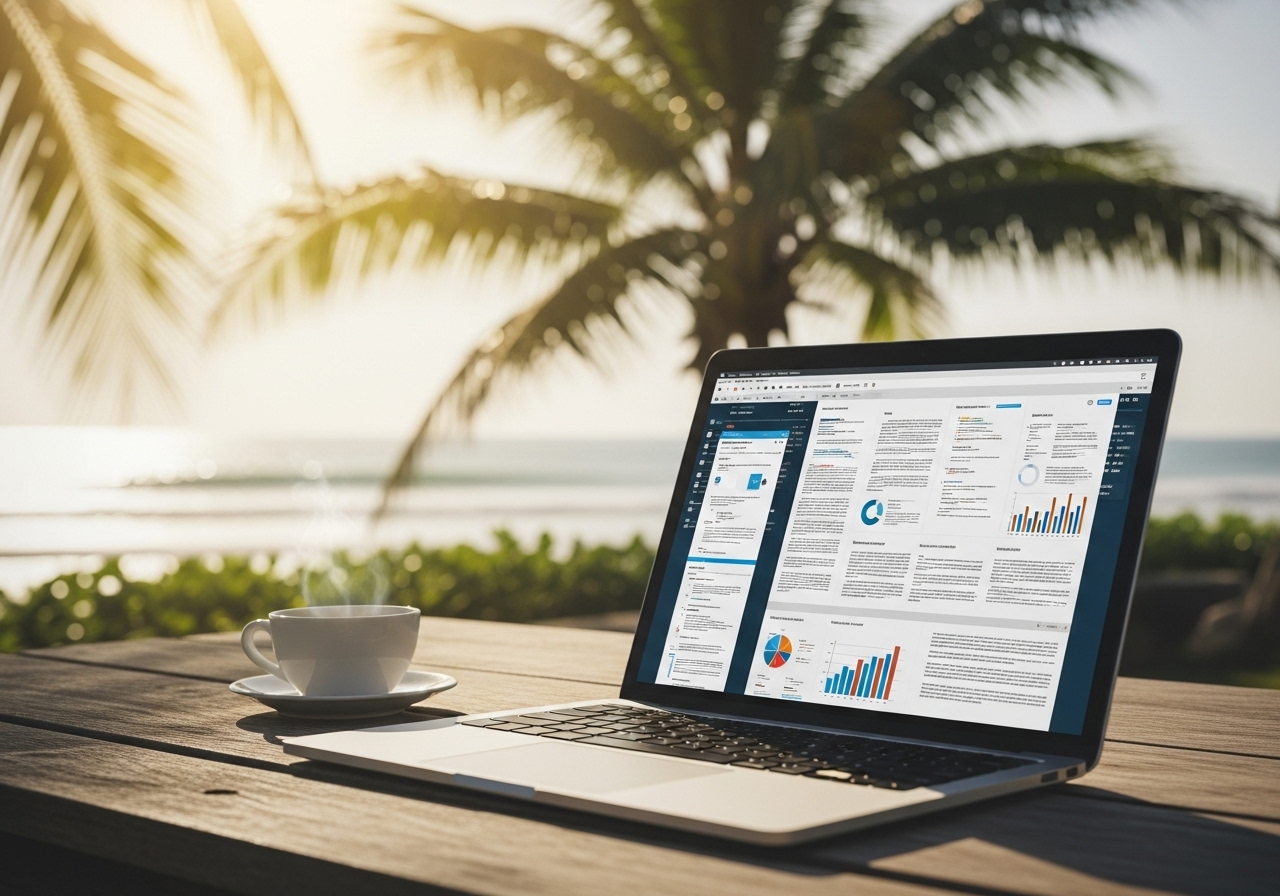
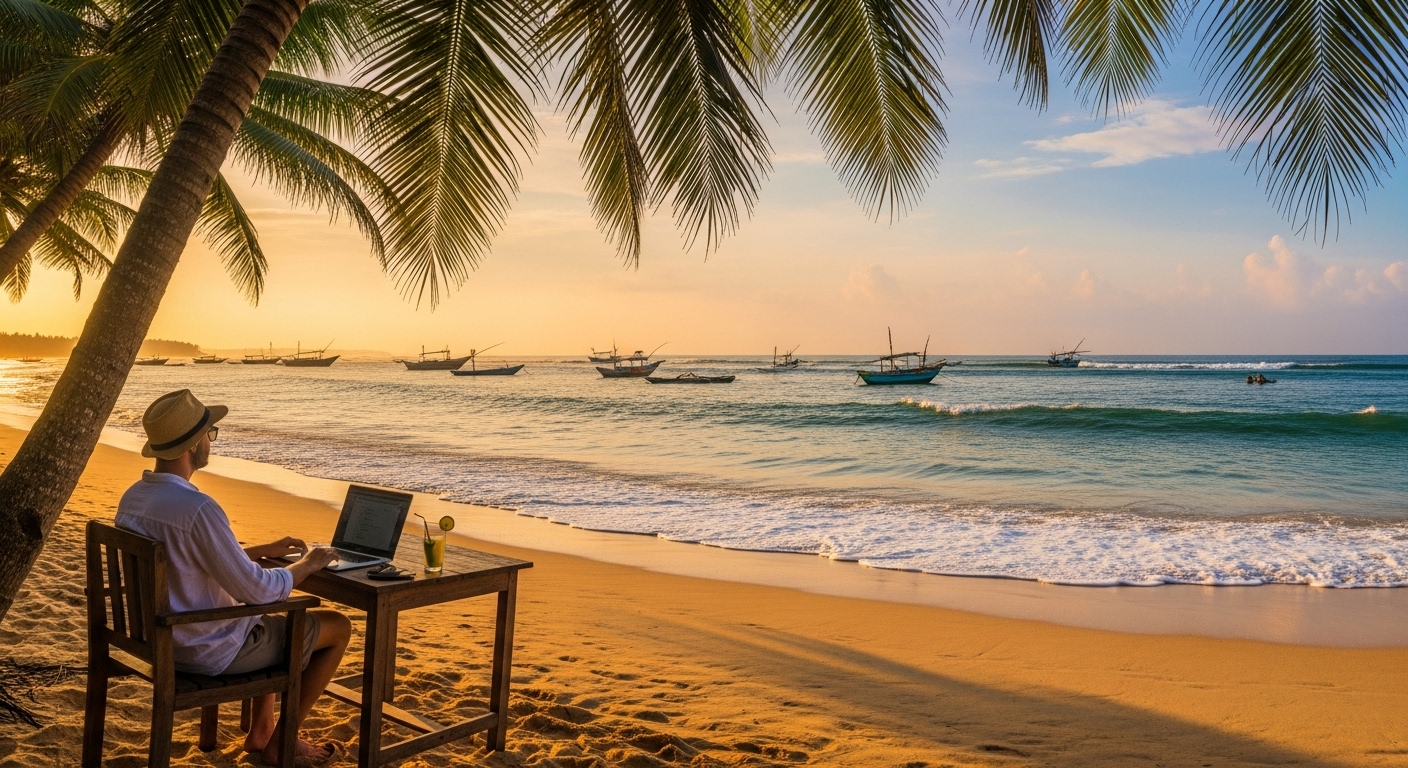
Digital nomad working on a laptop at the beach
At a Glance
- Best season: November/December to April, when the south coast is dry and calm
- Best bases: Weligama (surf and community), Galle (culture and comfort), Unawatuna/Dalawella (balance), Mirissa and Tangalle (quieter)
- Internet: fibre in many guesthouses and cafés, plus cheap 4G/5G as backup
- Monthly budget: roughly US$700–1,100 on a budget, US$1,300+ for a comfortable life, per person
- Visa: a 30-day ETA (free for 40 countries since May 2026) with extensions, or the digital nomad visa for stays of up to a year
Visas for Remote Workers
Tourist ETA and extensions
The standard ETA gives you 30 days, free for citizens of 40 countries since 25 May 2026. You can extend your stay through the Department of Immigration and Emigration in stages, up to a total of 270 days. Extension fees apply; check the current rates on immigration.gov.lk. Apply before your current permission runs out, because overstaying brings heavy fines.
Digital nomad visa (since February 2026)
Sri Lanka launched a digital nomad visa in early 2026 for people who work remotely for employers or clients outside the country. Reported requirements:
- A monthly income of around US$2,000 from abroad (higher with dependants)
- International health insurance and a medical clearance
- Supporting documents and a recommendation through the Ministry of Digital Economy process
- A fee of around US$500 a year, renewable annually
You can't take local employment on this visa. Details are still settling, and sources differ on the income threshold and fees, so check the official Department of Immigration and Emigration website before you apply.
Where to Base Yourself
Weligama: surf and community
A long, sandy bay with beginner-friendly waves, surf camps, cafés full of laptops and the biggest nomad community on the coast. It's sociable and busy in peak season, and nearby Ahangama and Midigama have quieter, more upscale options.
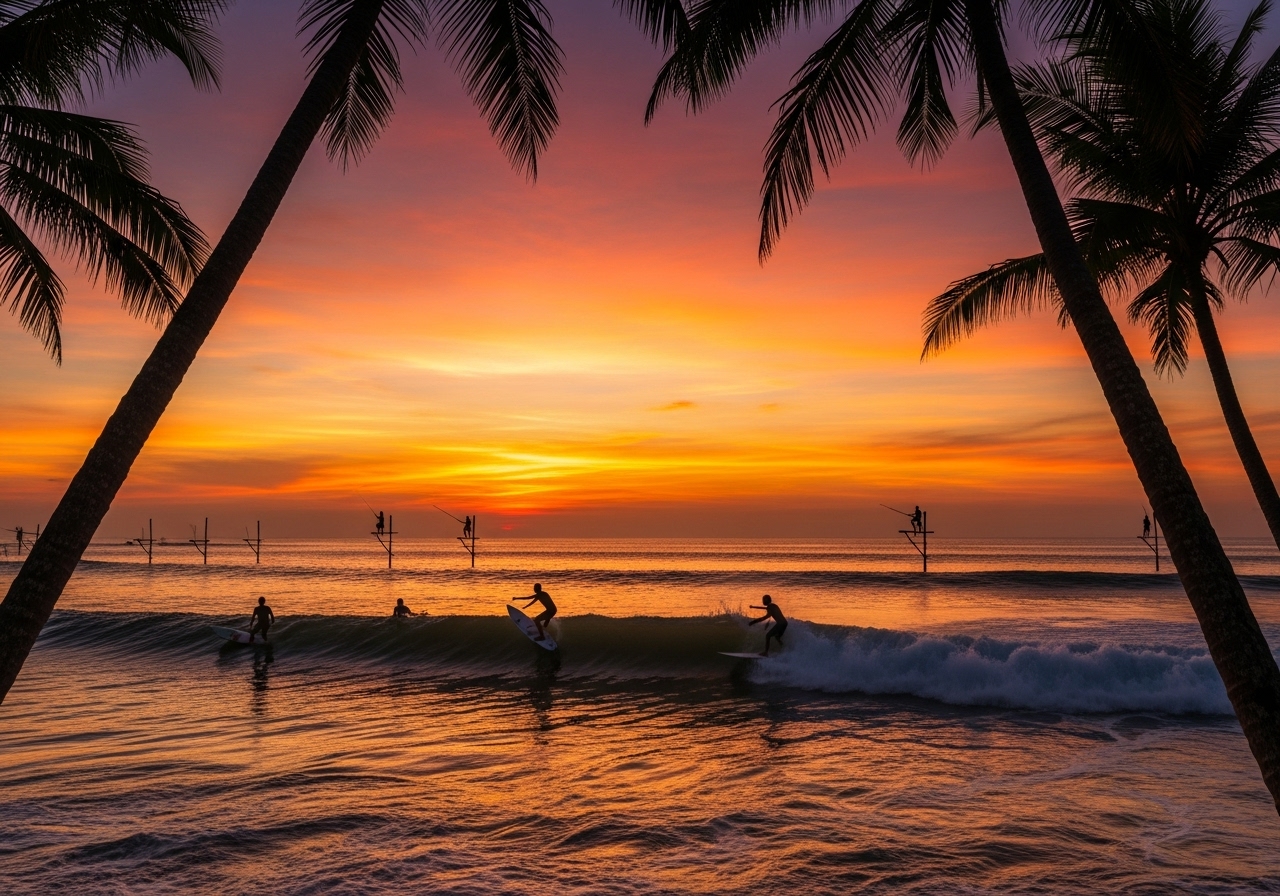
Surfers at sunset in Weligama Bay
Galle: culture and comfort
Galle Fort, a UNESCO World Heritage Site, has cobbled streets, boutique hotels, galleries and good coffee. It has the most reliable infrastructure on the coast, and the expressway gets you to Colombo in about 1.5 hours. It's pricier inside the fort, but cheaper just outside it.
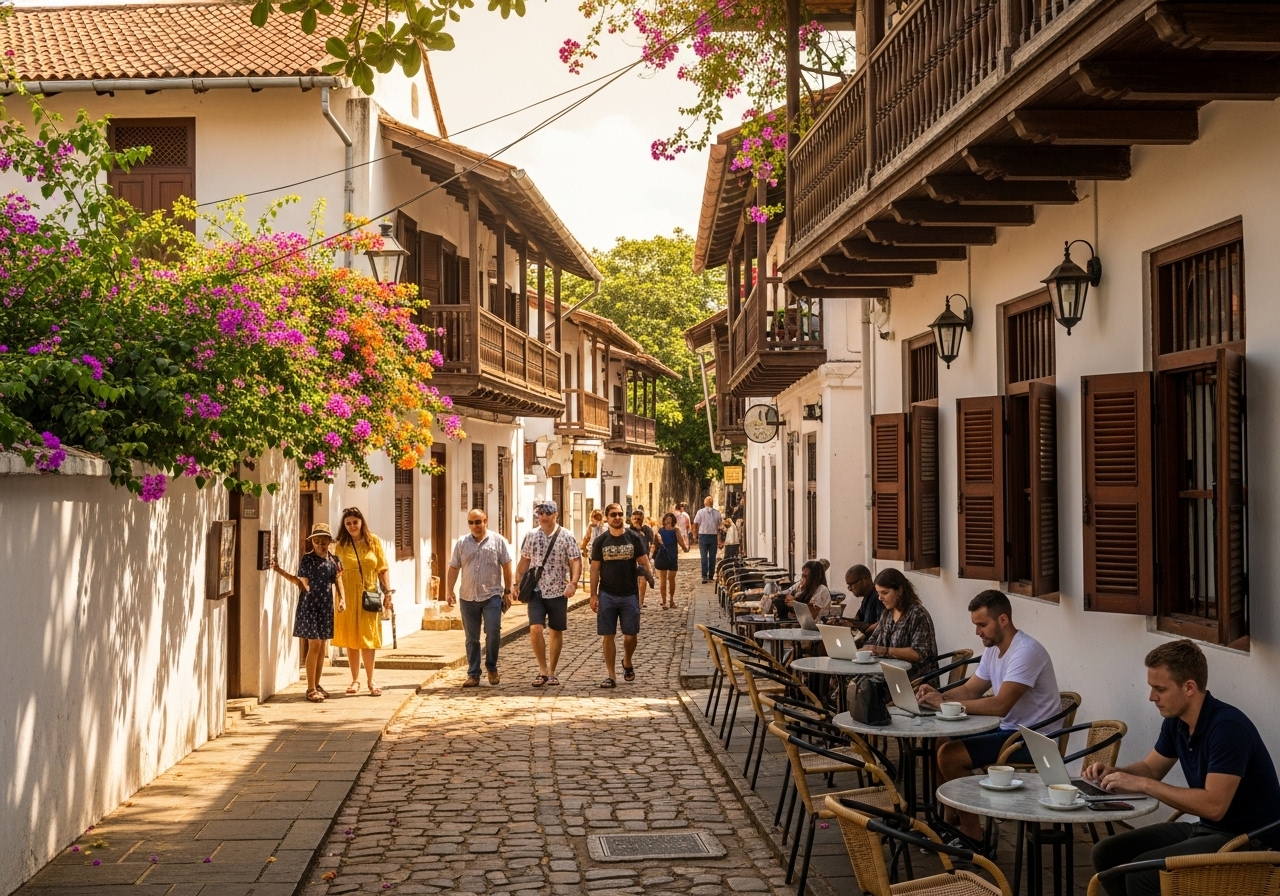
The streets of Galle Fort
Unawatuna and Dalawella: the all-rounder
Ten minutes from Galle, with a sheltered swimming bay, yoga studios and plenty of guesthouses with good Wi-Fi. It's a good balance of work and beach life.
Mirissa: beach town buzz
Famous for whale watching and its palm-fringed beach. It's lively in season, with fewer dedicated workspaces, so it suits people who are happy working from their room or a café.
Tangalle: quiet and spacious
Long, empty beaches and slower village life, about 1.5 hours east of Galle. It's great for focus and longer stays, but has fewer cafés and a smaller community. Note that the sea here is often too rough for swimming.
Internet and Staying Connected
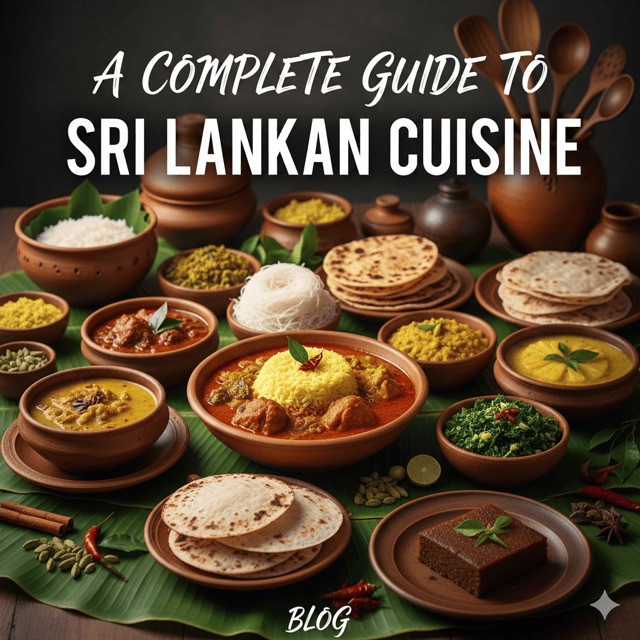
- Fibre: Many guesthouses, villas and cafés in Galle, Unawatuna, Weligama and Ahangama have fibre connections, typically fast enough for video calls. Always ask for a speed test screenshot before you book a long stay.
- Mobile data: Dialog generally has the best coverage on the coast, with SLT-Mobitel and Hutch as alternatives. Tourist SIMs at the airport cost around LKR 1,400 for 20 GB to LKR 2,450 for 50 GB (2026), and local top-ups are cheap. Many nomads keep a second SIM as a hotspot backup.
- Power cuts: Short outages happen, especially during storms. Choose places with a backup generator or UPS for the router, and keep a power bank charged.
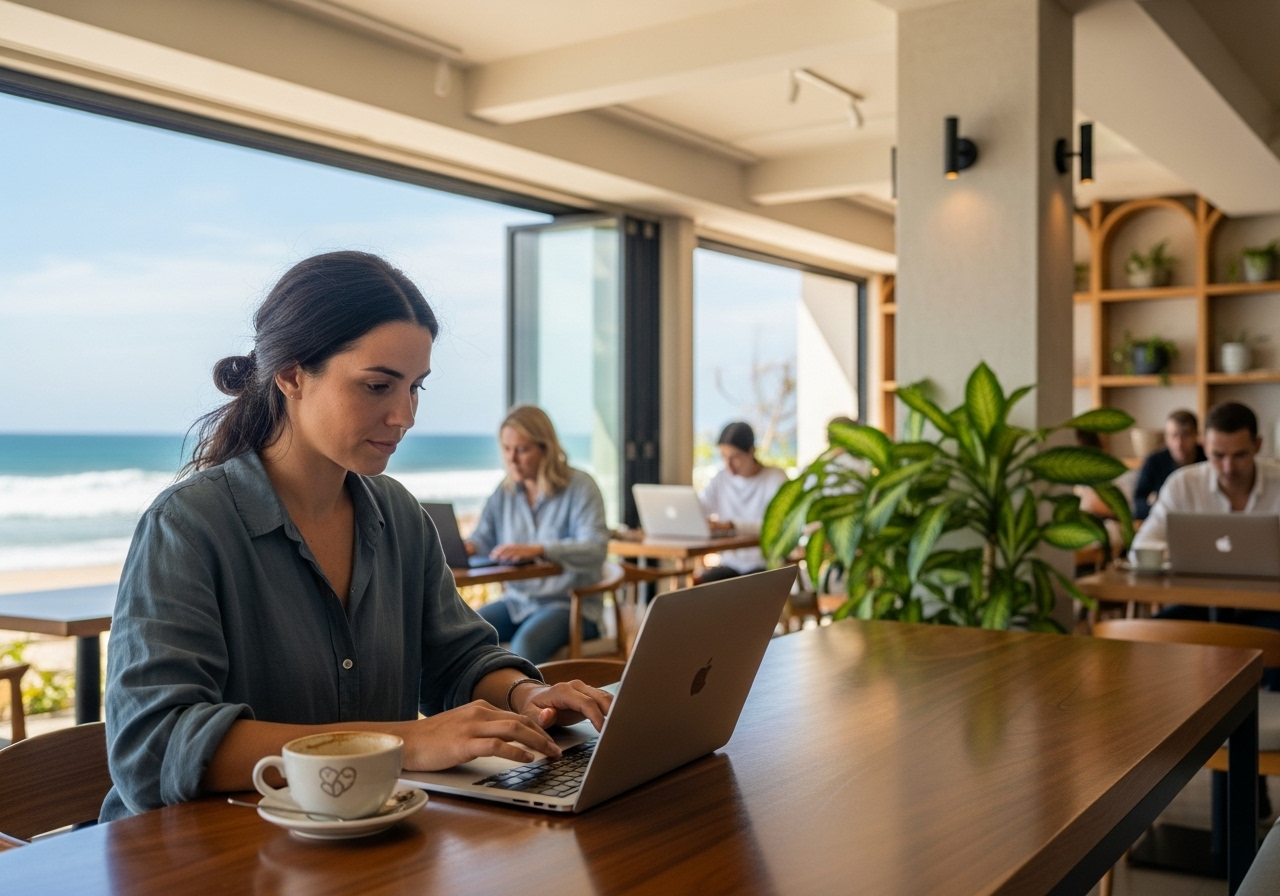
Remote worker at a beach café
Coworking and Work Cafés
Weligama, Ahangama and Galle have dedicated coworking spaces and surf-and-work hubs, and Unawatuna has several laptop-friendly cafés. Typical 2026 prices are a few thousand rupees for a day pass and roughly US$80–150 a month for a membership, depending on the space. Café etiquette: buy something every couple of hours, and avoid long calls in small cafés.
What It Costs (Per Month, 2026)
| Item | Budget | Comfortable |
|---|---|---|
| Room or studio (monthly rate) | US$300–500 | US$600–1,200 (apartment or villa room) |
| Food (local food plus some cafés) | US$200–300 | US$350–500 |
| Coworking or café spending | US$30–80 | US$80–150 |
| Scooter rental | US$100–200 | US$150–250 |
| Mobile data | US$10–15 | US$15–25 |
| Activities (surf, yoga, trips) | US$50–100 | US$150–300 |
| Total | ~US$700–1,100 | ~US$1,300–2,400 |
Prices jump from mid-December to February, the peak season, especially around Christmas and New Year. Book monthly rentals early for that period, and negotiate: monthly rates are often well below the nightly price.
Typical prices to check against: rice and curry around LKR 500–900, a café flat white around LKR 800–1,200, a surf lesson around LKR 5,000–8,000, and shared whale-watching trips from Mirissa around US$50–80.
When to Go
- November/December to April: The south coast's dry season, with calm seas, sunshine and the most events. This is peak nomad season.
- May to September: The southwest monsoon brings rough seas and rain to the south. Some nomads stay for the lower prices and quieter towns, while others move to Arugam Bay on the east coast, where it's the surf season.
- October to November: Inter-monsoon storms across the island. Stay flexible.
See our weather guide for month-by-month details.
Getting There and Around
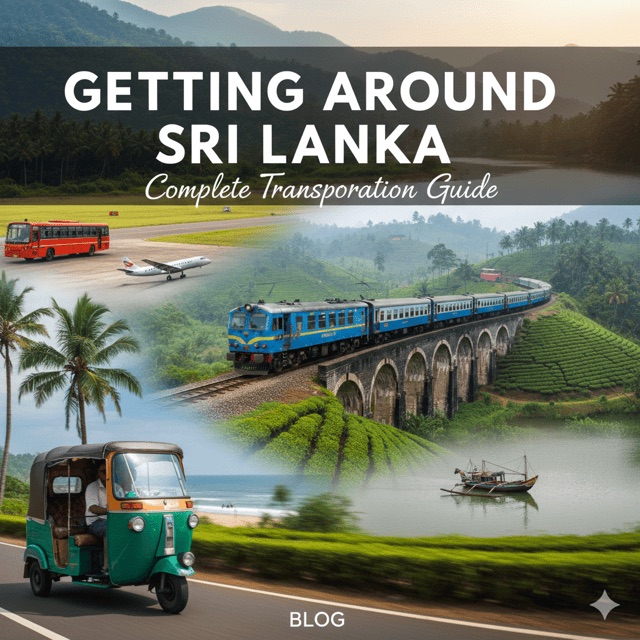
- From the airport, the south coast is about 2.5–3 hours by car via the expressway. A PickMe car or a pre-booked transfer is easiest.
- Trains run along the coast from Colombo to Galle and Matara, a slow but beautiful trip.
- Expressway buses run from Makumbura (Colombo) to Galle for LKR 930.
- Locally, nomads use scooters (with the correct permit) or PickMe tuk-tuks.
Read our scooter and rental guide and tuk-tuk price guide.
Health and Safety
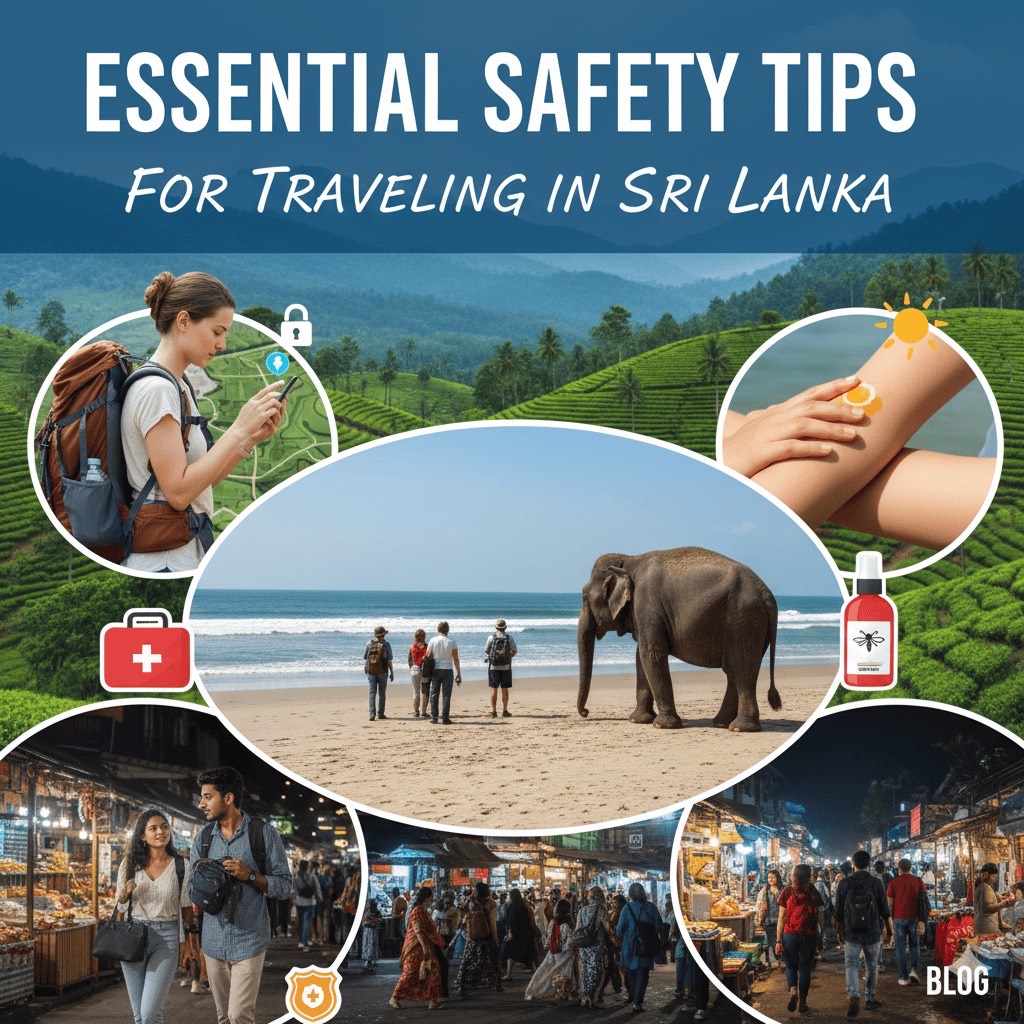
- The sea: Rip currents are serious, especially in the monsoon. Swim where locals and surf schools say it's safe.
- Dengue: Use repellent during the day, not just at night. See our tropical health guide.
- Scooters: These are the most common cause of injury for long-stayers. Wear a helmet, and avoid riding at night.
- Insurance: Make sure your nomad or travel insurance covers surfing and motorbikes.
- Medical care: Galle has private hospitals and the large Karapitiya Teaching Hospital. Save 1990 (ambulance), 119 (police) and 1912 (tourist hotline).
Being a Good Long-Stayer
- Support local businesses, and pay fair prices to surf instructors, cooks and drivers.
- Dress modestly away from the beach, and respect temples and Poya days.
- Refill water bottles instead of buying plastic; many cafés offer refills.
- Join beach clean-ups. Several surf towns run them regularly.
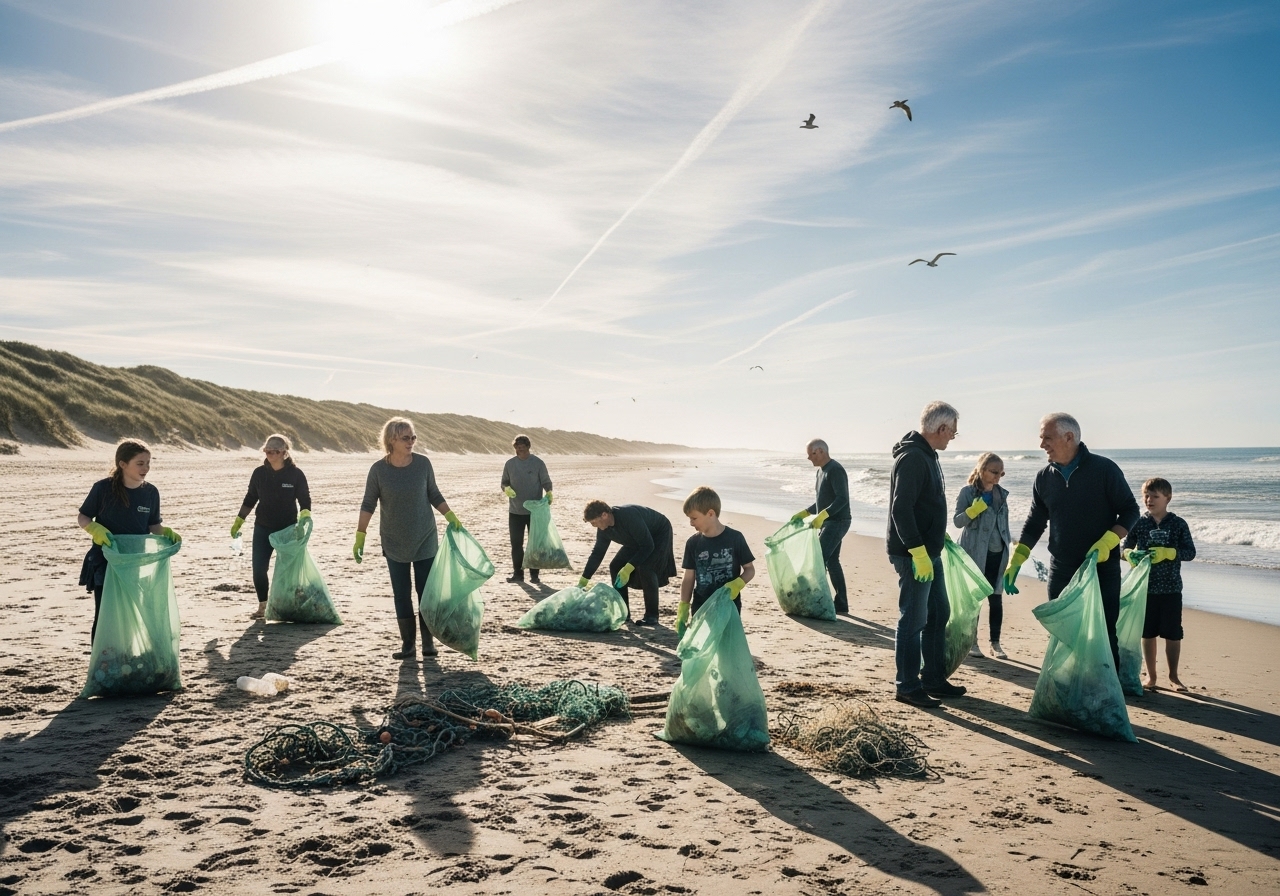
Volunteers at a beach clean-up
FAQ
Is Sri Lanka good for digital nomads? Yes, especially the south coast from December to April, which combines reliable internet in the main towns, a friendly community and low costs.
Do I need the digital nomad visa? For a month or two, the ETA plus extensions is usually enough. For longer stays working remotely, the digital nomad visa is the clearer legal option.
Is the internet good enough for video calls? In most fibre-connected guesthouses and cafés, yes. Keep a mobile hotspot as a backup.
Weligama or Galle? Weligama if you surf and want community; Galle if you prefer culture, comfort and cafés.
The south coast rewards people who stay a while. Find a good base, set up your backup internet, and enjoy the sunsets. The Sri Lanka Safe app helps with fair prices, scam alerts and emergency info wherever you settle.
Travel Sri Lanka with Sri Lanka Safe
Fair tuk-tuk prices, scam alerts, offline emergency contacts and AI trip planning, in one free app.