Tuk-Tuk Prices in Sri Lanka: Fair Fare Guide
What a tuk-tuk should cost in Sri Lanka in 2026, how to use PickMe and Uber, when to insist on the meter, and how to negotiate without the stress.
Tuk-tuks (officially "three-wheelers") are the quickest way to get around Sri Lankan towns, and riding one is half the fun of a visit. They're also where most tourists overpay. The good news is that ride-hailing apps have made fair prices easy to find. Here's how to pay what locals pay.
At a Glance
- Fair fare (2026): about LKR 110 for the first km, then roughly LKR 90–100 per km
- Easiest option: book on PickMe or Uber, where the price is shown before you confirm
- Street tuk-tuks: agree on the total price, or the meter, before you get in
- Payment: cash in rupees; app rides can also be paid by card
- Problem with a driver? Call the 1912 tourist hotline
What a Tuk-Tuk Should Cost
There's no single nationwide tariff, but drivers' associations set the going rate. In March 2026 the standard first-kilometre charge rose from LKR 100 to LKR 110. Each extra kilometre costs roughly LKR 90–100, depending on the city and the driver.
| Trip | Typical fair price |
|---|---|
| Short hop, 1–2 km | LKR 200–300 |
| Across town, 3–5 km | LKR 350–550 |
| 5–10 km | LKR 550–1,000 |
| 10–20 km | LKR 1,000–2,000 |
Prices rise at night, in heavy rain, and in tourist hotspots such as Ella, Mirissa and Galle Fort. Treat the table as a starting point and check an app for your exact route. At about LKR 330 to the US dollar, a typical 4 km ride costs about LKR 400, or around US$1.20.
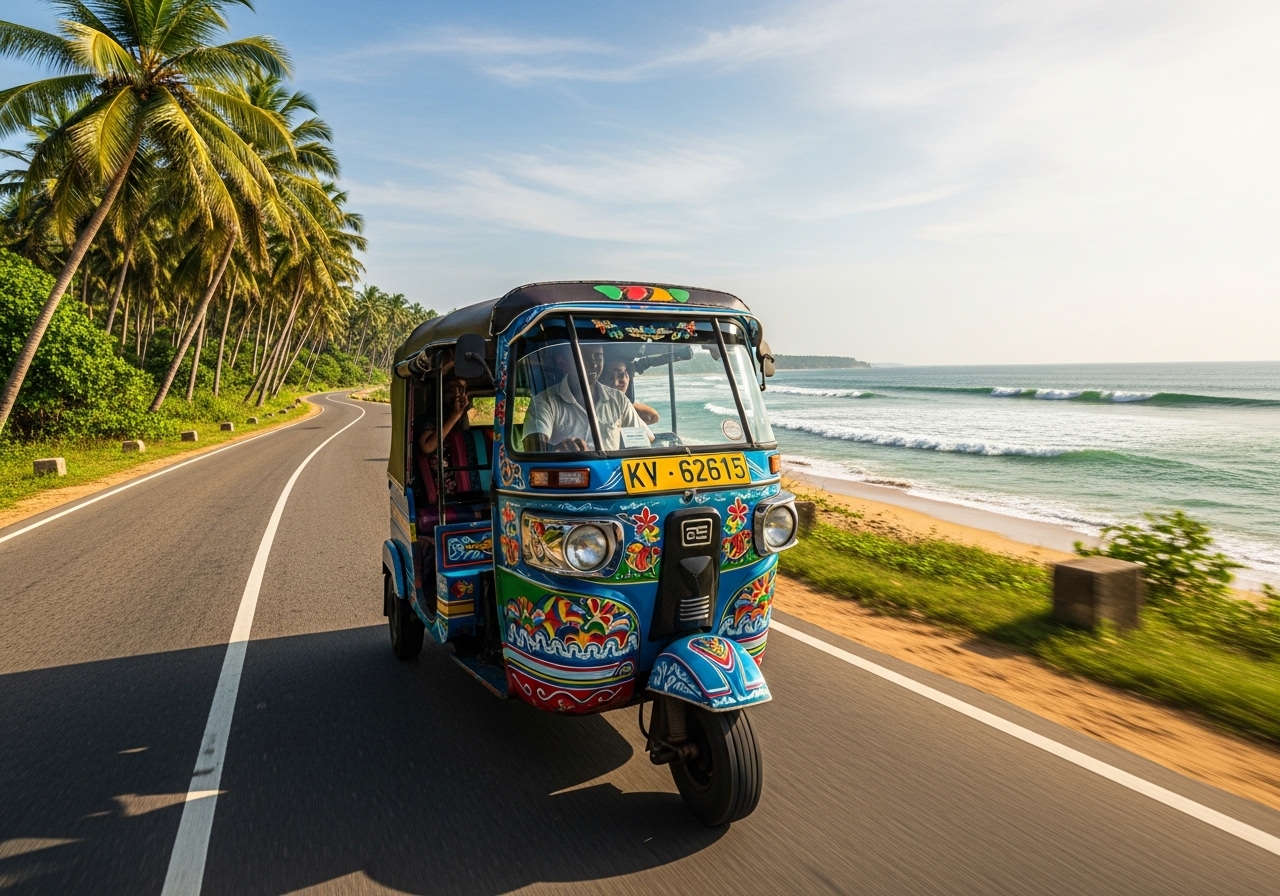
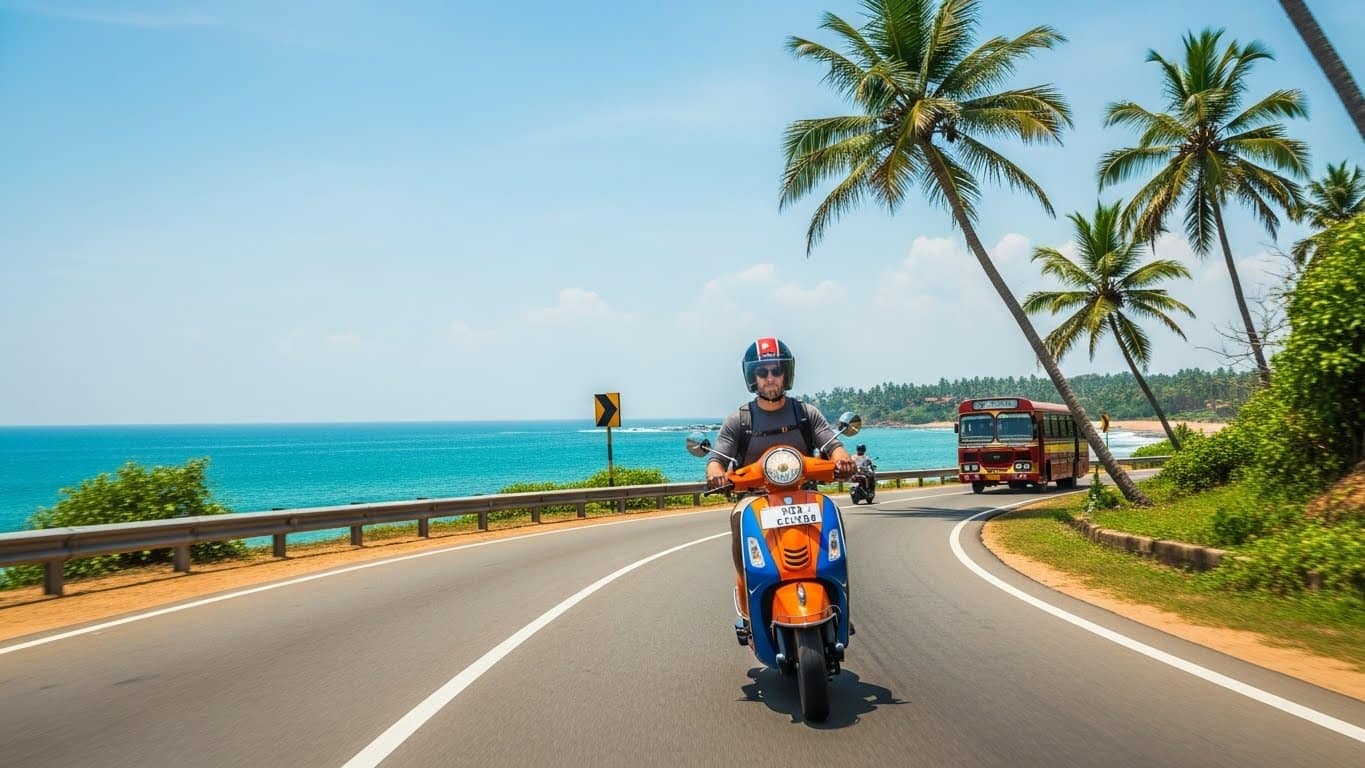
A tuk-tuk driving along a coastal road in Sri Lanka
Ride-Hailing Apps: Your Price Benchmark
PickMe
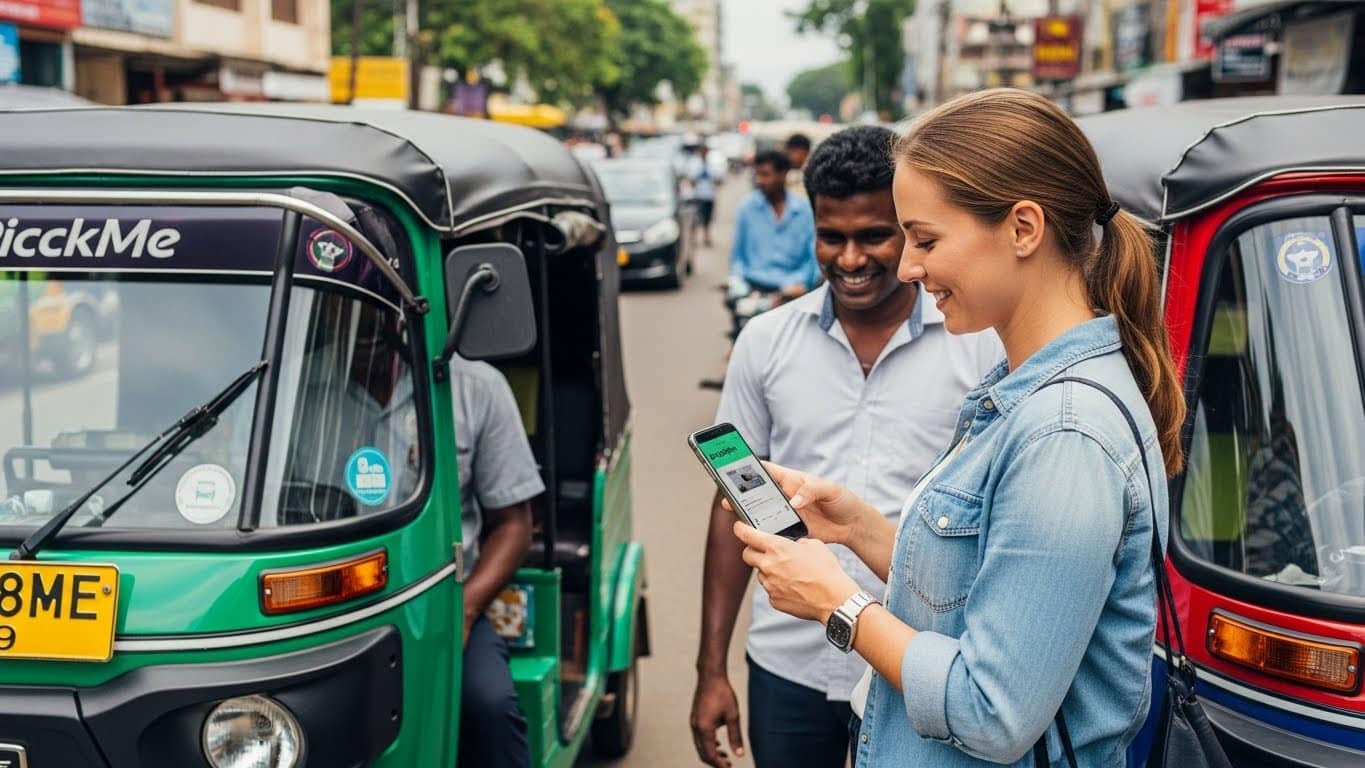
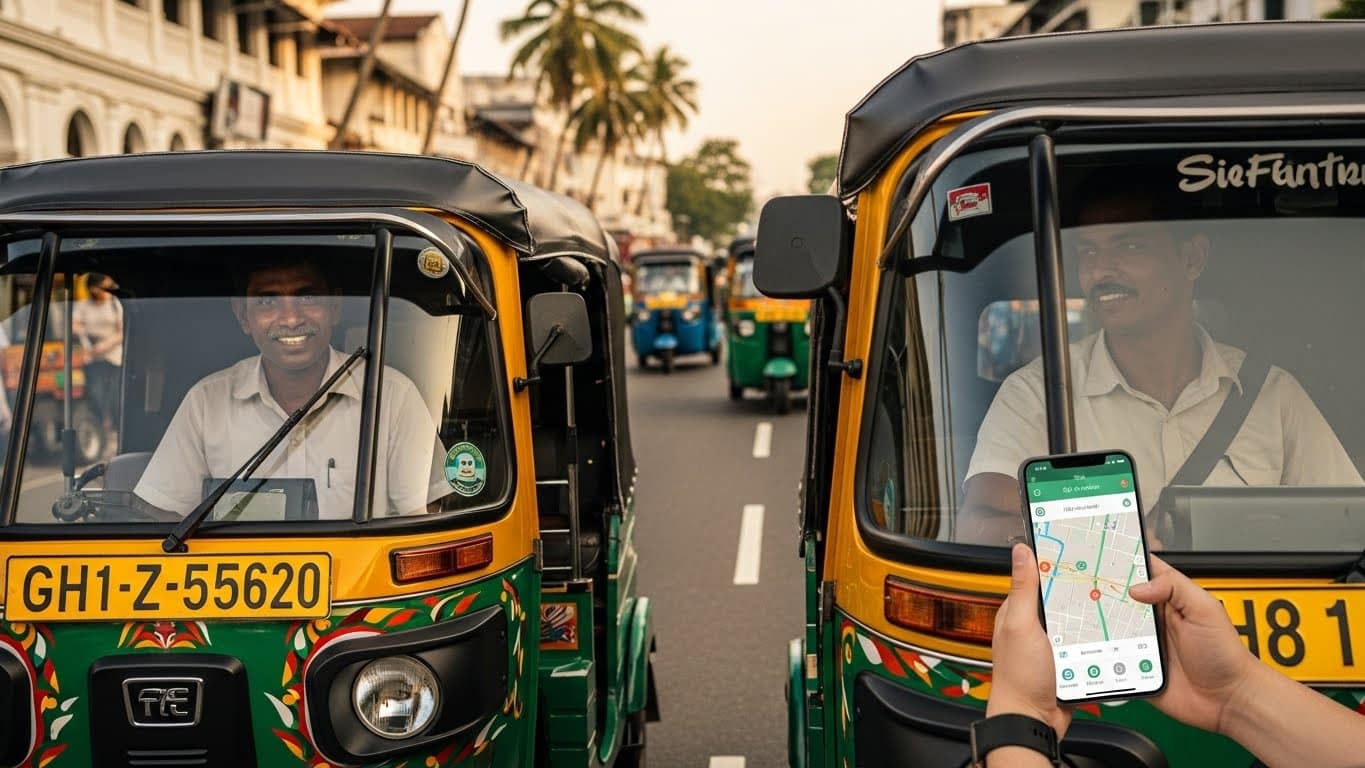
PickMe is Sri Lanka's homegrown app and has the most tuk-tuks. It shows the fare upfront, tracks the trip by GPS, lets you rate the driver, and accepts cash or card. It works throughout Colombo, Kandy, Galle and Negombo, and in most large towns. Coverage is thinner in small hill-country and beach villages.
Uber
Uber operates in Colombo and several other cities, with tuk-tuks ("Uber Tuk") as well as cars. It's handy if you already have the app and a card on file, but there are usually fewer tuk-tuks than on PickMe outside the capital.
Use the app even when you don't book
Open the app, enter your destination and note the price. Then:
- If a street driver quotes far more, show them the app price.
- Many drivers will happily take the app fare, or a little above it, in cash, since it saves them the app's commission.
- If they refuse, book through the app. A tuk-tuk is rarely more than a few minutes away in town.
Expect surge pricing on the apps at rush hour, late at night and during big events. Even with a surge, the app price is still a fair reference.
Just landed? Our first 24 hours guide explains how to get a SIM and book your first ride from the airport.
The Meter
Meters have been mandatory for passenger tuk-tuks in the Western Province (Colombo and Negombo) since 2022, with the Southern Province following. In practice, enforcement is patchy and many drivers would rather negotiate.
- Ask "Meter?" before you get in. If the driver says yes, check it's been reset to the base fare before you set off.
- Follow the route on Google Maps. A long detour is the usual way to inflate a metered fare.
- If the driver says the meter is "broken," either agree a fixed total using the app price or find another tuk-tuk.
Negotiating Without the Stress
When there's no meter or app, negotiate. Keep it friendly; it's a normal part of life here, not a confrontation.
- Know the price first. Check an app, or ask your guesthouse what a fair fare is.
- Ask for the total: "How much to [place], total?"
- Counter calmly. If the quote is double the fair price, offer the fair price. Meeting a little above it is fine.
- Walk away politely if it's still far too high. Often the driver calls you back, and if not, there's another tuk-tuk nearby.
- Confirm before you get in, and settle any extra stops or waiting time upfront.
Never agree to "per person" pricing
A tuk-tuk is hired by the trip, not by the passenger. "500 per person" for a group of three is LKR 1,500 for a ride that should cost 500. Always ask, "Is that for all of us?"
Other tricks to watch for
- The shop stop: A driver offers a cheap or "free" ride and detours to a gem, spice or souvenir shop, where he earns commission. Say firmly that you want to go straight to your destination.
- "Your hotel is closed": A driver claims your guesthouse has shut or burned down and suggests another, which pays him commission. Call your hotel to check.
- The day-tour upsell: In places like Ella and Sigiriya, a short ride turns into a pitch for an expensive full-day tour. It's fine to say no, or to compare prices with your guesthouse first.
- No change: Carry LKR 100 and 500 notes so you can pay the exact amount.
Staying Safe in a Tuk-Tuk
- Maximum three passengers. Don't squeeze in more.
- Keep your bag on your lap or between your feet, and keep your phone inside the cab. Phones get snatched by passing motorbikes.
- Hold on during sharp turns. Most tuk-tuks have no seatbelts.
- It's fine to ask the driver to slow down: "Hemin, please" means "slowly" in Sinhala.
- At night, use an app (it records the route and driver) or a driver your hotel recommends, and share your trip with someone.
- In the rain, roll down the side curtains and expect slower trips.
Regional Notes
- Colombo: Excellent app coverage, so use it. Avoid tuk-tuks waiting outside five-star hotels and Galle Face, and walk a block away for normal prices. Traffic jams can make short trips slow.
- Kandy: Apps work in the city. Hills and traffic around the lake push prices up slightly. Agree on the price before trips to viewpoints or temples.
- Galle and the south coast: Prices in Unawatuna, Mirissa and Hikkaduwa are inflated for tourists. PickMe works in Galle and the larger towns.
- Ella: App coverage is limited, so expect to negotiate. Ask your guesthouse for a trusted driver for trips to Nine Arch Bridge, Little Adam's Peak or Ravana Falls.
When Things Go Wrong
- Stay calm and keep it polite. Most disputes end with a fair compromise.
- Take a photo of the number plate.
- If the driver is aggressive, threatens you or won't let you leave, ask to be dropped somewhere public, get out and call 119 (police).
- For overcharging or harassment, call the 1912 tourist hotline. It's open 24/7, works from any phone and can connect you to the Tourist Police.
- For app rides, report the driver in the app. They take complaints seriously.
Left something behind? For app rides, contact support through the app straight away. For street tuk-tuks, a photo of the plate makes recovery far more likely. Report it to the nearest police station or call 1912.
Tipping
Tipping isn't expected for short rides; rounding up to the nearest LKR 50 or 100 is a nice gesture. For a driver who waits for you, helps with luggage or takes you on a half-day trip, LKR 200–500 is generous.
FAQ
Can I just use apps everywhere? In Colombo, Kandy, Galle and Negombo, yes. In small towns and beach villages you'll often need a street tuk-tuk, so knowing the fair price matters.
Are tuk-tuks safe for women travelling alone? Generally yes. App rides with GPS tracking are the safest choice, especially at night. See our solo female travel guide.
Can I pay in dollars or euros? No, pay in rupees. Some drivers may accept foreign cash, but at a poor rate.
What about longer trips, like the airport? For the 30+ km from the airport to Colombo, a car through PickMe or Uber is more comfortable and often only slightly more expensive. See our complete transport guide.
Should I rent my own tuk-tuk? It's possible with the right permit. Read our guide to renting scooters, cars and tuk-tuks first.
Final Tip
Check the app, agree on the total before you get in, and keep it friendly. Do those three things and tuk-tuk rides will be one of the highlights of your trip, not a source of stress. The Sri Lanka Safe app includes a fare calculator so you can check a fair price for any route before you set off.
Travel Sri Lanka with Sri Lanka Safe
Fair tuk-tuk prices, scam alerts, offline emergency contacts and AI trip planning, in one free app.