Sri Lanka Beach Safety: Rip Currents, Flags and Jellyfish
How to spot and escape a rip current in Sri Lanka, what beach flags mean, which coast is calm in which month, and how to treat jellyfish stings and reef cuts.
Sri Lanka's beaches look gentle, but many drop away steeply and the Indian Ocean is powerful. Police recorded 388 water-related deaths in 2025, across the sea, rivers and reservoirs. Police lifeguards also rescued 96 foreign tourists that year, and those rescues were at the lucky end of the same problem.
You don't need to avoid the sea. You just need to know which coast is in season, where the lifeguards are and what to do if the water starts pulling you out.
The short version
- Choose the coast that's in season. The south and west are calmest from December to April, and the east from May to September.
- Swim near lifeguards when you can, and ask them or your host about that day's conditions.
- Never swim after drinking, alone, or at night.
- Red flag means stay out, even if other people are in the water.
- In a rip, don't swim against the current. Float, then swim parallel to the beach.
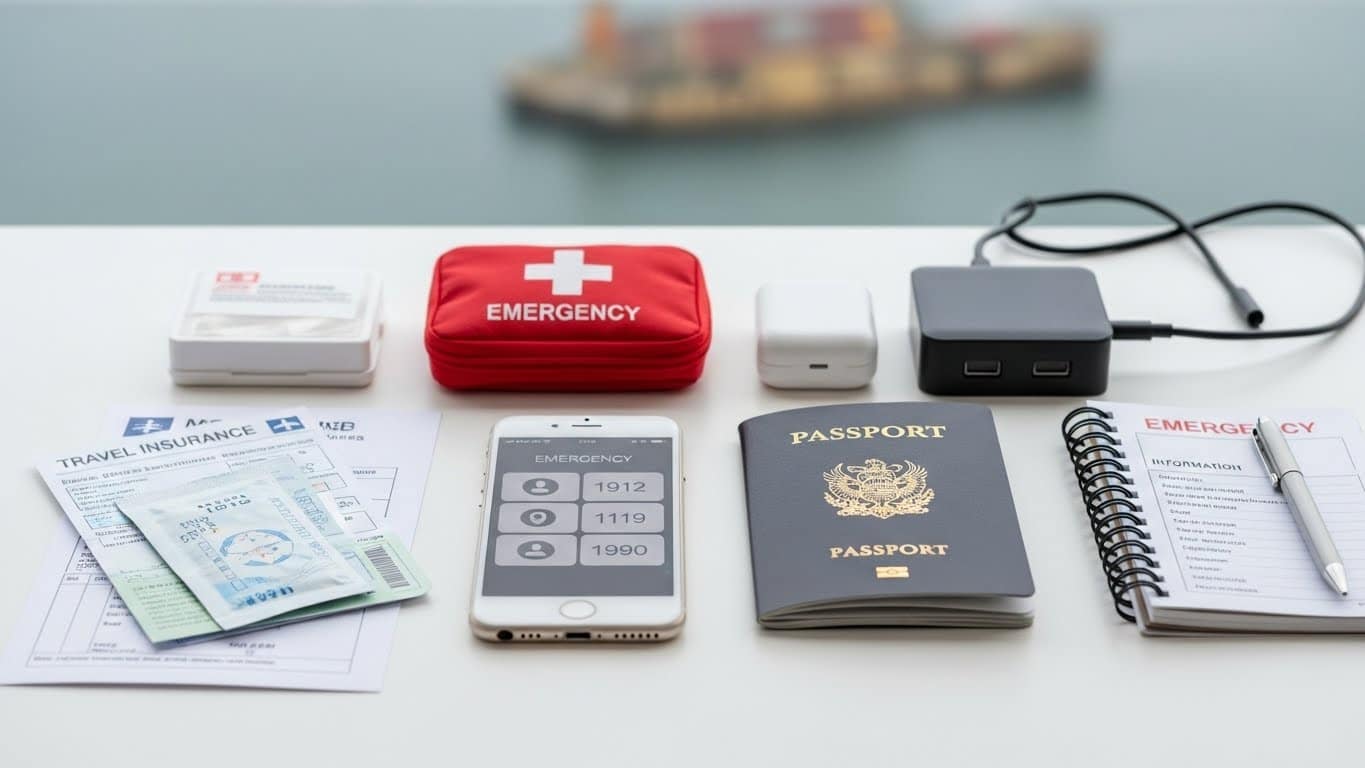
- Emergency: call 1990 for an ambulance and 119 for police.
Which coast, which month
Sri Lanka has two monsoons, so one side of the island is usually calmer than the other.
| Coast | Calmest | Rougher | Places |
|---|---|---|---|
| South and west | December to April | May to September | Negombo, Bentota, Hikkaduwa, Unawatuna, Mirissa, Tangalle |
| East | May to September | November to February | Arugam Bay, Pasikudah, Nilaveli, Uppuveli |
The months around each change can go either way, so check the sea itself rather than the calendar. Our weather and packing guide covers the seasons in more detail.
"In season" doesn't mean safe. Rip currents often form on calm, sunny days, and a surfer can still get into trouble in good weather.
Beaches: what to expect
No Sri Lankan authority publishes a current beach-by-beach safety rating, so treat this as a starting point. Ask locally each day.
- Unawatuna and Bentota: Often described as among the better swimming beaches in season. The Coast Guard has had lifesaving posts at both.
- Polhena (near Matara): A reef breaks the waves and creates calm water, but it has been closed to swimmers during jellyfish outbreaks in the southwest monsoon.
- Mirissa and Hikkaduwa: Popular, with Coast Guard lifesaving posts, but Coast Guard reports describe repeated rescues of tourists caught in currents. Stay near the lifeguards.
- Tangalle and Dickwella: This stretch is known for big waves and strong underwater currents. It's beautiful, but be careful if you aren't a strong swimmer, and take local advice before going in.
- Pasikudah (east coast): Widely described as a shallow bay, which makes it one of the better choices for families in season.
- Arugam Bay: Mainly a surf destination. We couldn't confirm lifeguard cover, so don't assume it.
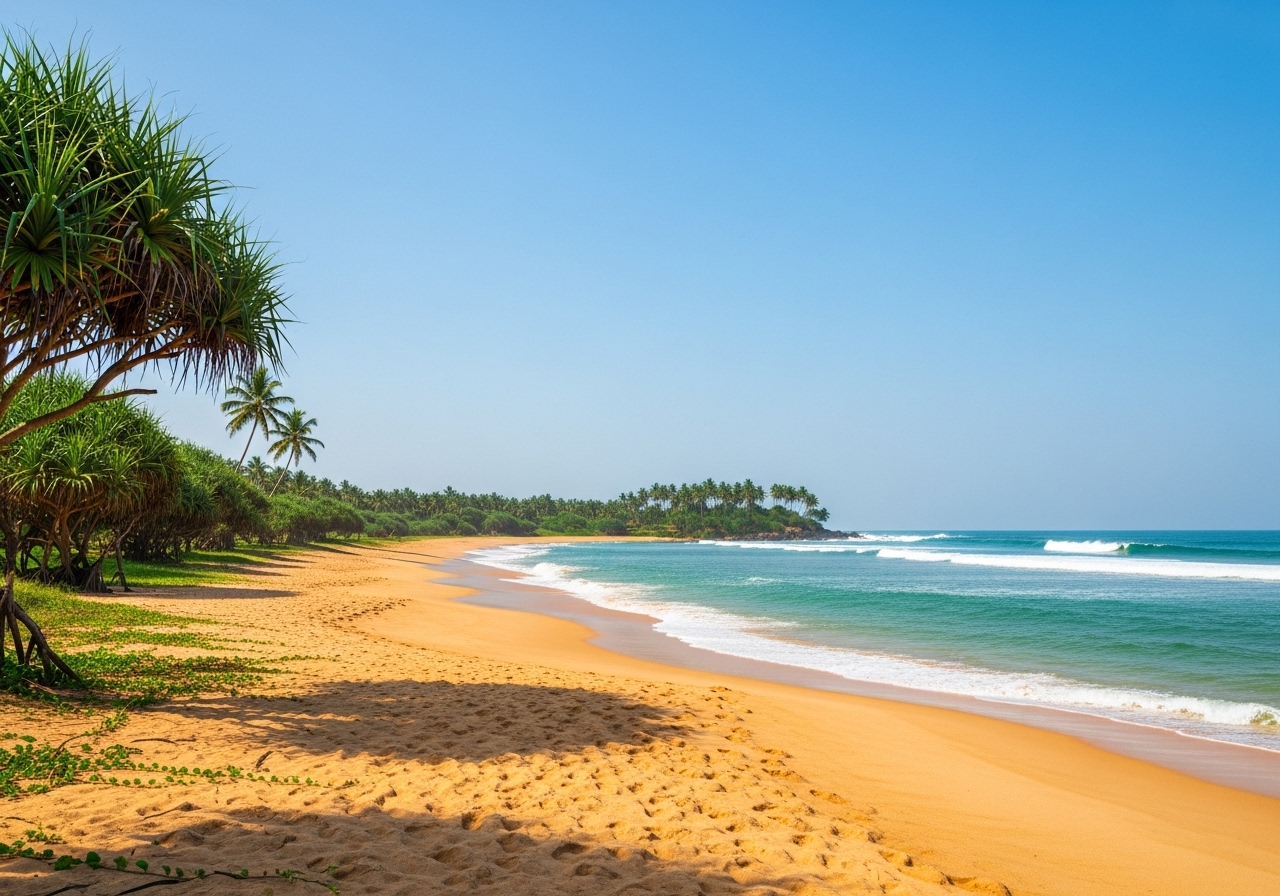
An empty golden beach near Tangalle with waves breaking close to the shore
An empty beach is a warning sign as well as a treat. If nobody local is swimming there, ask why.
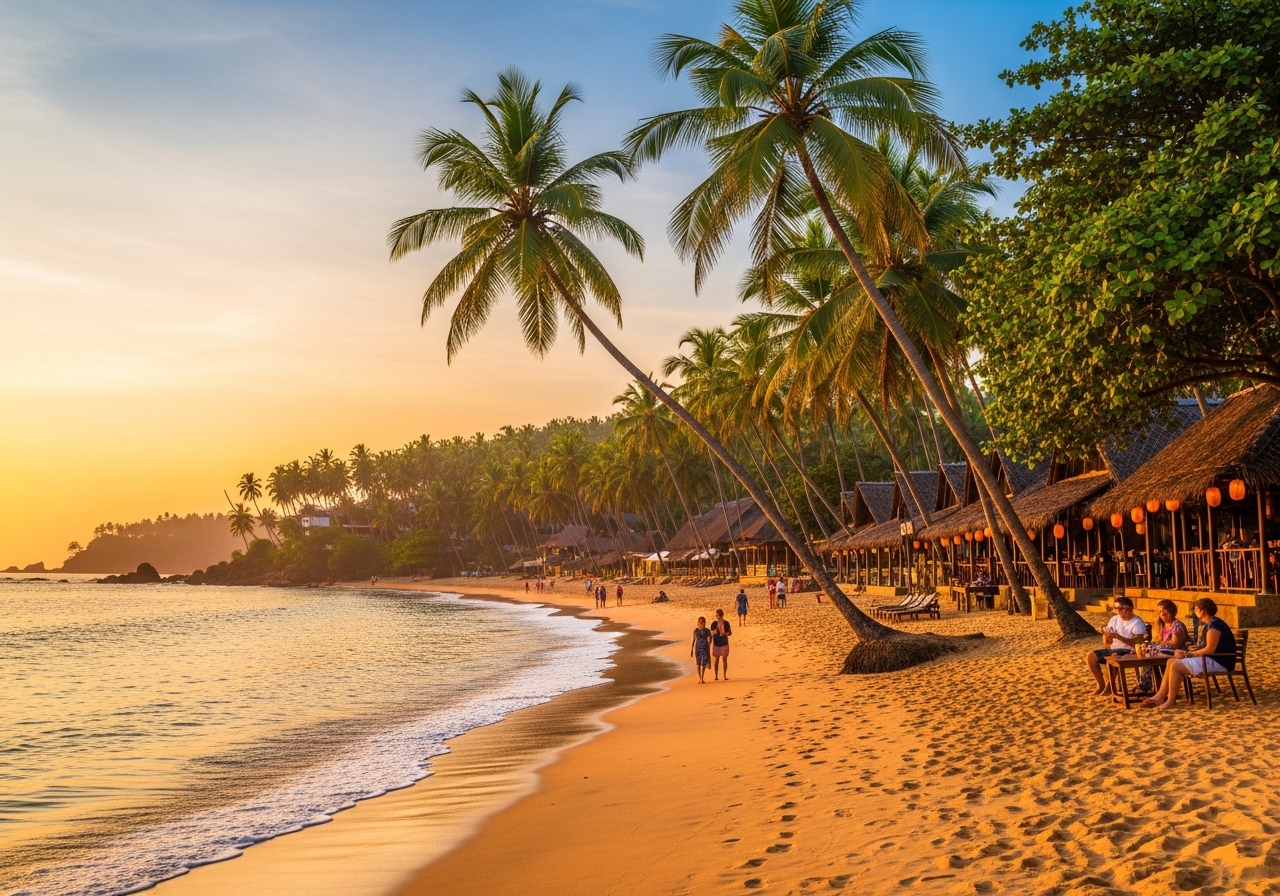
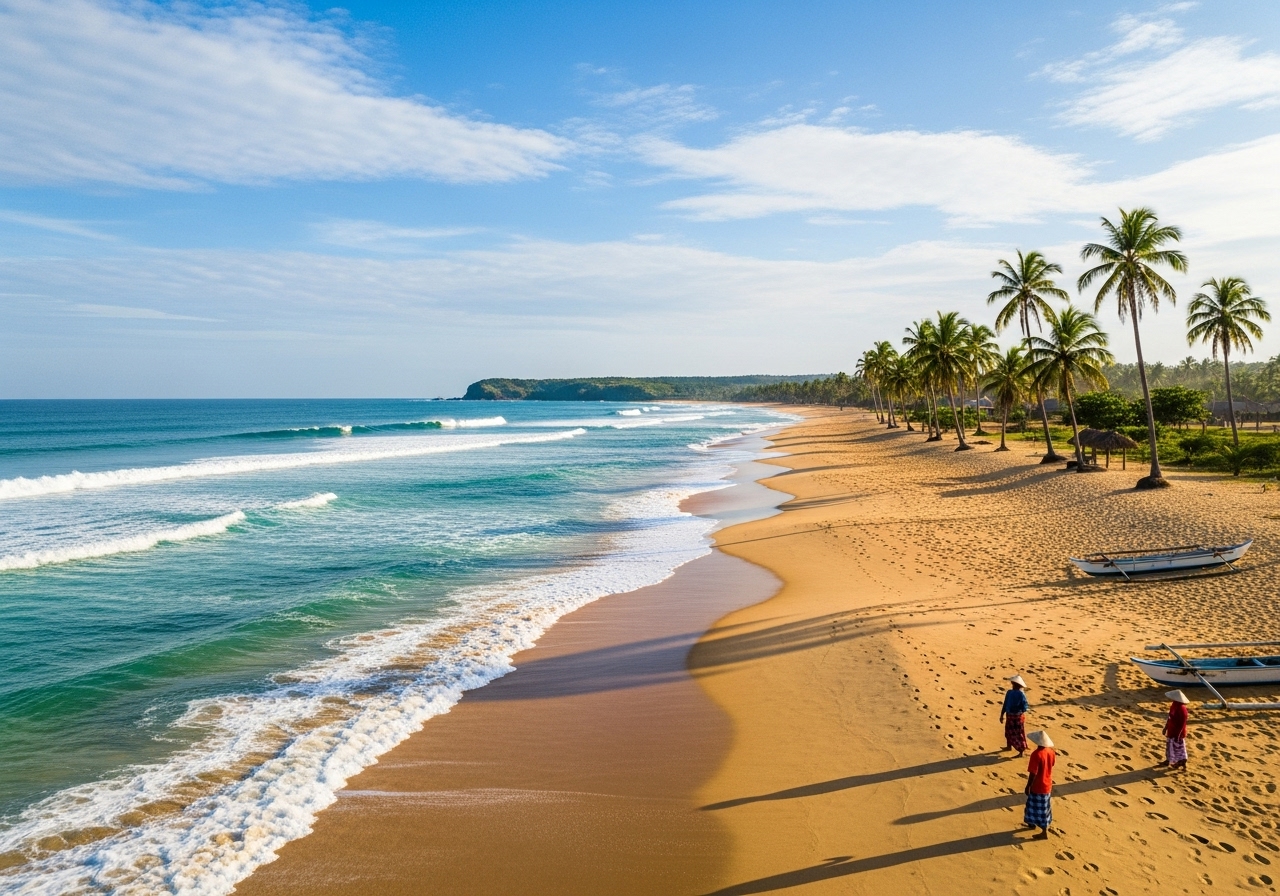
Unawatuna beach at golden hour, with a sheltered bay and beachfront restaurants
How to spot a rip current
A rip is a narrow channel of water running away from the shore. It won't pull you under, but it can carry you out faster than you can swim back. Most people get into danger by exhausting themselves fighting it.
Look from the sand before going in, ideally from somewhere higher up. Watch for:
- A gap in the line of breaking waves, where the water looks deceptively smooth
- A darker channel running out to sea
- Foam, sand or debris moving steadily away from the beach
- Choppy water in a narrow strip, with calmer waves on each side
If you can't tell, assume there's a current and ask someone.
If you're caught in a rip
- Stay calm and don't swim against it. You won't win, and you'll tire quickly.
- Float on your back to save energy and let the current carry you. Rips usually weaken further out.
- Swim parallel to the beach until you're out of the pull.
- Swim back at an angle, using the waves to help you.
- If you can't get back, stay afloat, raise one arm and shout.
If someone else is in trouble
Many people drown trying to rescue someone else. Don't go in unless you're trained.
- Alert a lifeguard, or shout for help from surfers or fishermen.
- Call 1990 or 119 and say which beach you're on, using a landmark such as a hotel or restaurant.
- Throw something that floats, such as a surfboard, a body board, a cool box or a life ring.
- Keep your eyes on the person and point at them, so that rescuers know where to go.
Flags and lifeguards
Police say that red flags mark dangerous conditions. Reports describe two flags in use:
- Red, or red with a crossed-out swimmer: Swimming is dangerous or prohibited.
- Yellow: The sea is rough, so take extra care.
Flags and signs aren't found everywhere, and a beach without them isn't necessarily safe. Local reports have also described people ignoring red flags and even removing them.
Cover is growing but patchy. In early 2026, police reported 71 lifeguard units with 308 officers, covering 31 of the 48 police divisions. The Coast Guard also runs lifesaving posts at popular beaches, including Mirissa, Unawatuna, Bentota and Hikkaduwa. Hours vary, so don't assume someone will be watching at dawn or dusk.
Other things that catch people out
Alcohol
Police specifically warn against going into the water after alcohol or drugs. A beach party followed by a night swim is one of the most avoidable risks on any trip.
Shore breaks
Many beaches shelve steeply, so waves break suddenly and close to the sand. Being knocked over in waist-deep water can injure your neck or shoulder, and the backwash can pull you off your feet. Watch several sets of waves before you go in, and don't turn your back on the sea.
Reef and rocks
Reefs and rocks sit just below the surface at many beaches. Police also warn about submerged hazards, hidden pits and unstable coastal areas.
- Wear water shoes on rocky entries, and don't stand on coral.
- Stay away from wet rocks and sea walls in big swell, because waves can knock you off.
- Clean any reef cut well with soap and clean water. Small wounds get infected quickly in the heat, so see a doctor if the redness spreads.
Jellyfish
Bluebottles (a type of stinging jellyfish) arrive on the southern coast during the southwest monsoon, roughly May to September. In 2026 they stung dozens of swimmers at beaches around Matara and Galle, some of whom needed hospital treatment. Don't touch any that have washed up, because they can still sting.
If you're stung:
- Get out of the water.
- Remove any tentacles with tweezers or a gloved hand. Don't use bare fingers.
- Rinse with seawater, not fresh water, and don't rub.
- Soak the area in hot water that you can comfortably tolerate (about 45°C) for 20 minutes.
- Don't use vinegar on a bluebottle sting. It may make the pain worse.
Call 1990 for breathing difficulties, signs of an allergic reaction, or stings covering a large area.
Children
Police advise close supervision on beaches and around pools. Stay within arm's reach of small children in the water. The backwash on a steep beach can knock a child over in very shallow water.
Surfing and boats
- Surf with a leash, and take lessons at a beach that suits your level. Strong winds and rough seas can catch out even experienced surfers.
- Check the forecast before heading out, and don't paddle out alone.
- On boat trips, ask for a life jacket and check that it fits before you leave. If the crew can't provide one, choose another operator.
Rivers, waterfalls and reservoirs
The police figures include inland water, where currents, hidden holes and cold water are all hazards. Rain upstream can also raise water levels quickly. Swim only where locals say it's safe, and stay out after heavy rain. Some lagoons and rivers also have crocodiles.
Before you swim: a two-minute check
- Is this coast in season?
- Are there lifeguards or flags, and what do they say?
- Are local people swimming here?
- Can you see any of the rip signs from the sand?
- Is someone on the beach watching you?
- Have you avoided alcohol?
If you're unsure about more than one of these, go for a walk or swim somewhere else.
FAQ
Is it safe to swim in Sri Lanka?
Yes, at the right beach and in the right season, especially near lifeguards. Most problems come from rough seas, rip currents and alcohol. Conditions change daily, so ask a lifeguard or your host.
Which months are safest for swimming?
On the south and west coasts, December to April. On the east coast, May to September.
Are there lifeguards on Sri Lankan beaches?
On many popular beaches, yes, but not all, and not all day. Police and the Coast Guard both run lifesaving units. Don't count on finding one at quieter beaches.
What does a red flag mean?
Stay out of the water. Police use red flags to mark dangerous conditions, even when the sea looks calm from the sand.
Who do I call in a beach emergency?
Alert the nearest lifeguard, then call 1990 for an ambulance or 119 for police. Our emergency guide has the full list of numbers.
Does travel insurance cover surfing?
Not always. Check your policy, because surfing and diving may need an add-on.
For more on staying well in the heat, see our tropical health guide. The Sri Lanka Safe app keeps emergency numbers available offline and sends safety alerts while you travel.
Sources
- Ada Derana: police water safety figures and advice, February 2026
- Sunday Times: lifeguards and warning flags, 2013
- Sunday Times: bluebottle jellyfish on the south coast, June 2026
- Healthdirect Australia: jellyfish sting first aid
- US National Weather Service: rip current safety
- UK government travel advice for Sri Lanka
Travel Sri Lanka with Sri Lanka Safe
Fair tuk-tuk prices, scam alerts, offline emergency contacts and AI trip planning, in one free app.