Renting a Scooter or Car in Sri Lanka
Self-driving in Sri Lanka in 2026: which permit you need, rental prices, speed limits, road etiquette and how to stay safe on a scooter, car or tuk-tuk.
A scooter along the south coast or a car through the tea country gives you freedom no bus can match. But Sri Lanka's roads are among the more challenging in Asia, and the paperwork trips up many visitors. Here's what you need to drive legally, what it costs, and how to come home in one piece.
At a Glance
- You need a local permit: your home licence alone isn't enough
- Scooters: about US$6–15 a day; cars about LKR 8,000–12,000 a day without a driver
- Speed limits: 50 km/h in towns, 70 km/h on open roads, 100 km/h on expressways (40 km/h for tuk-tuks)
- Biggest risks: buses overtaking head-on, night driving, animals on the road
- Honest advice: unless you're an experienced driver in chaotic traffic, a car with a driver costs about the same and is far less stressful
The Paperwork
Sri Lanka doesn't let you drive on a foreign licence or an International Driving Permit (IDP) by itself. You need one of these two local documents, plus your original home licence:
Option 1: DMT temporary driving licence
- Issued by the Department of Motor Traffic (DMT), including at a counter in the arrivals hall at Colombo airport (opened 2025). There's also the DMT office in Werahera, near Colombo.
- Requirements: a full home licence (no learner or provisional licences) valid for at least another year, plus your passport.
- Cost: around LKR 15,000 for one month after the late-2025 fee revision, with longer validity costing more. Check the current fee on the DMT website.
- It covers cars and motorcycles that match the categories on your home licence, but not tuk-tuks or heavy vehicles at the airport counter.
Option 2: AA of Ceylon recognition permit
- Issued by the Automobile Association of Ceylon in Colombo.
- Requires a 1949 Geneva Convention IDP from your home country, plus your licence and passport.
- This is the usual route for renting a tuk-tuk, which needs the right endorsement.
Reputable rental companies help with the permit and won't hand over a vehicle without one. Be wary of any rental that says "don't worry about the permit": if you have an accident, your insurance is likely to be void.
Motorbikes: To ride anything above 50cc, you need a motorcycle category on your home licence.
What It Costs (2026)
| Vehicle | Typical daily rate |
|---|---|
| 50–125cc scooter | US$6–15 (around LKR 2,000–5,000) |
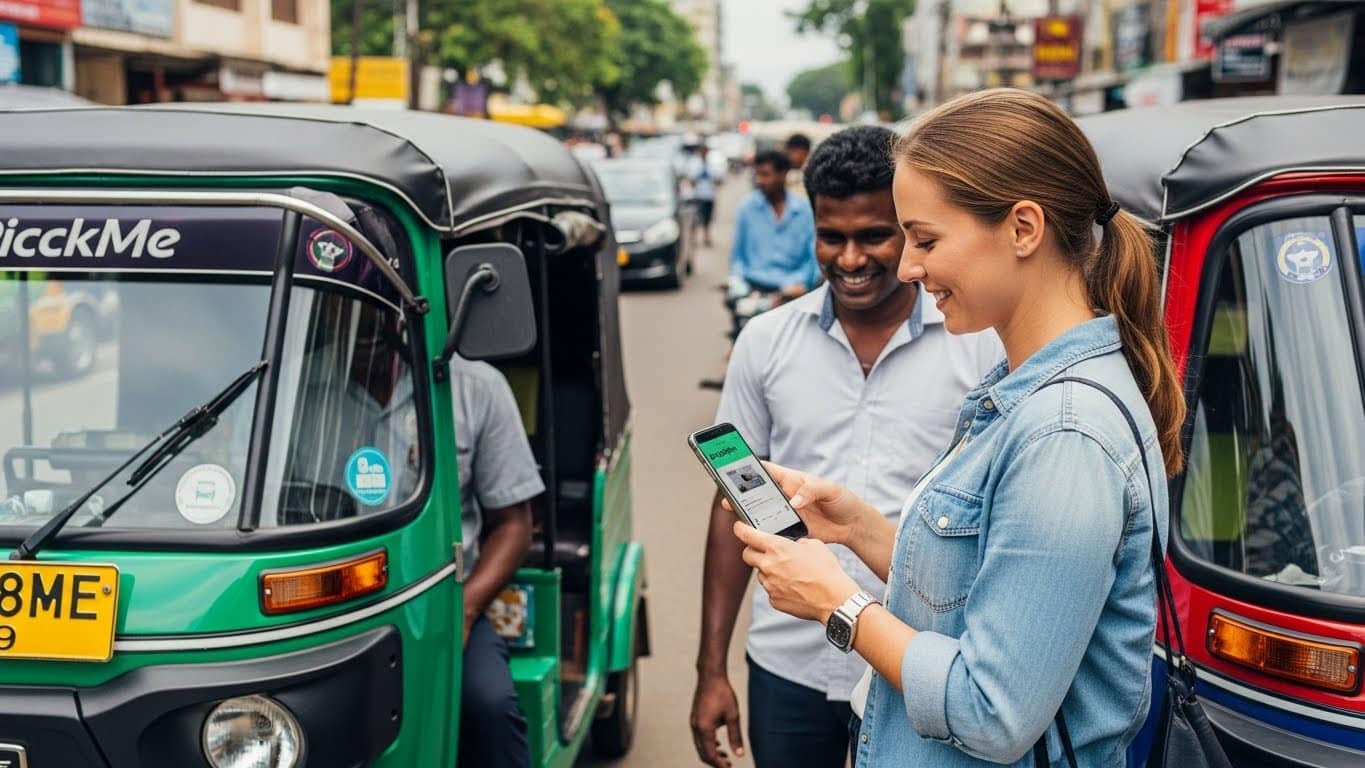
| Tuk-tuk (self-drive) | Varies; usually booked through specialist rental companies |
| Small car (self-drive) | LKR 8,000–12,000 |
| Car with driver | US$50–90, fuel usually included |
Expect a refundable deposit, often taken as a card hold or cash, and sometimes your passport copy. Never leave your actual passport as a deposit. Photograph the vehicle from every side before you set off, and check the tyres, brakes, lights and horn.
Rules of the Road
- Drive on the left. Most cars are right-hand drive.
- Speed limits: 50 km/h in built-up areas, 70 km/h on open roads, 100 km/h on expressways. Three-wheelers are limited to 40 km/h and aren't allowed on expressways at all. Posted signs override these defaults.
- Seatbelts are compulsory in the front seats, and helmets are compulsory on motorbikes for both rider and passenger.
- Drink-driving is illegal and enforced at police checkpoints, especially around holidays.
- Police checkpoints are common. Stop, stay polite and show your licence, permit and the vehicle papers.
- Expressways are tolled, cash or card at the booths. Motorbikes and tuk-tuks aren't allowed.
How Traffic Really Works
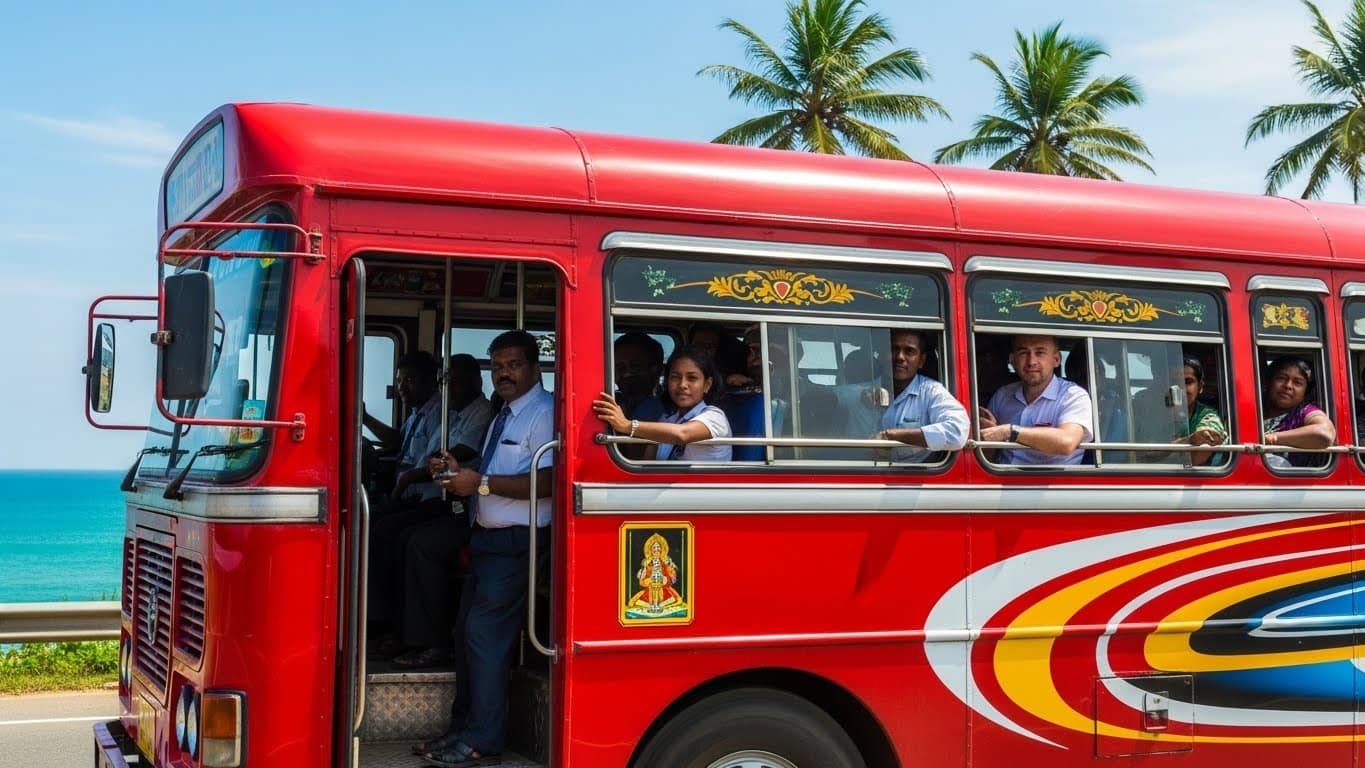
The written rules matter less than the unwritten one: bigger vehicles go first. Buses and lorries overtake on bends and expect you to move over. Tuk-tuks and motorbikes squeeze through any gap.
- Expect oncoming overtakers. If a bus is coming at you in your lane, slow down and move left. Don't play chicken.
- The horn is a signal, not an insult. A short toot means "I'm here" or "I'm overtaking." Use it on blind bends.
- Flashing headlights usually mean "I'm coming through," not "go ahead."
- Watch for sudden stops by buses and tuk-tuks picking up passengers.
- Animals: dogs sleep on the road, cows wander, and in the dry zone (around Habarana, Udawalawe and Yala) wild elephants cross at dusk. Never approach or try to drive past an elephant blocking the road; wait at a distance with the engine running.
Why You Should Avoid Night Driving
- Many rural roads are unlit, and pedestrians, cyclists and broken-down vehicles appear without warning.
- Oncoming drivers often leave their high beams on.
- Animal activity peaks after dark, elephants included.
- Drink-driving is more common in the evening.
Plan to reach your destination before sunset, around 6–6:30 pm all year.
Our wildlife safety guide explains what to do if you meet an elephant on the road.
Scooters: Extra Rules
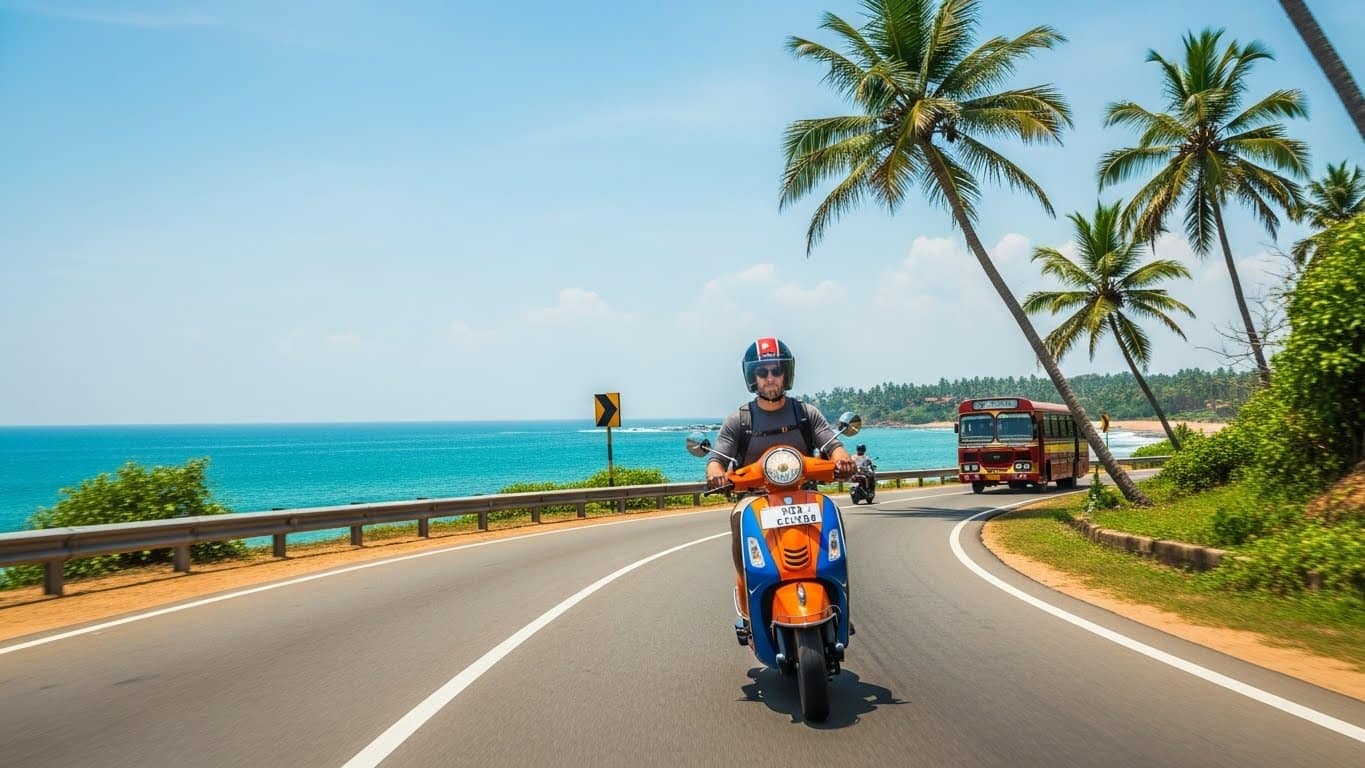
Scooters are the most popular rental, especially in Weligama, Mirissa, Hikkaduwa and Arugam Bay, and the most common way visitors get hurt.
- Ride only if you're already confident on two wheels.
- Wear a proper helmet, closed shoes and long trousers when you can.
- Sand on the road and wet tarmac are slippery. Slow down near beaches and after rain.
- Keep your bag on your body or under the seat, not hanging from the handlebars, where it's easy to snatch.
- Check that your travel insurance covers motorbikes, and at what engine size. Most require a valid licence and a helmet.
Choosing a Vehicle
- Scooter (110–125cc): Best for short coastal hops and beach towns. A 50cc scooter struggles on hills.
- Small car: Good for couples on main roads. Choose an automatic if you're not used to driving on the left.
- SUV or car with driver: Best for the hill country and families. Steep, narrow roads with sheer drops are much easier with a local at the wheel.
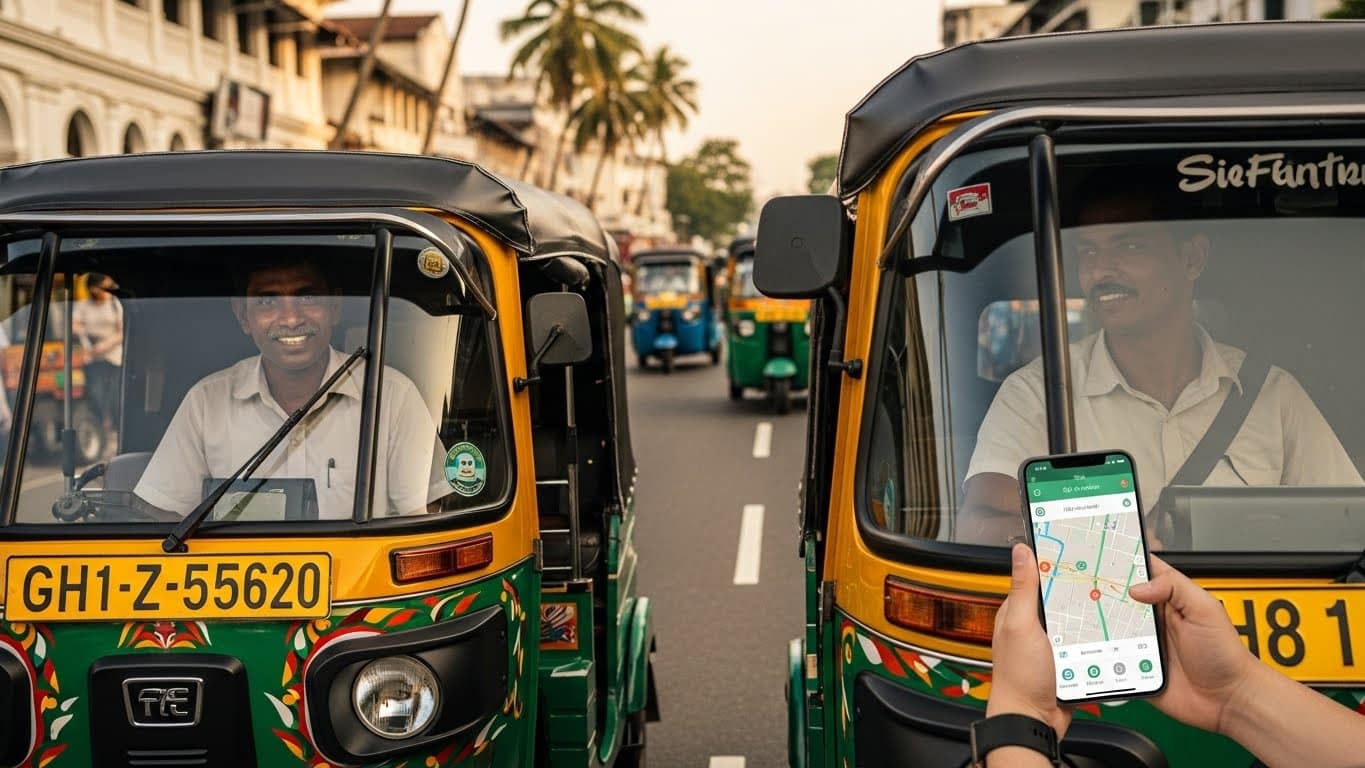
- Tuk-tuk: A fun adventure, but slow (40 km/h maximum) and tiring on long days.
If You Have an Accident
- Stop, put on the hazard lights and check for injuries.
- Call 1990 (ambulance) and 119 (police).
- Don't move the vehicles until the police arrive, unless they're dangerous where they are.
- Photograph everything, including other vehicles and number plates.
- Call your rental company and your insurer.
- Get a police report; you'll need it for any claim.
- If you need help, call 1912, the 24/7 tourist hotline.
Sample Self-Drive Trips
- South coast by scooter (1 day): Galle Fort → Unawatuna → Koggala → the stilt fishermen at Ahangama → Weligama, about 30 km on the coast road, back before dark.
- Cultural Triangle by car (3 days): Dambulla → Sigiriya → Polonnaruwa, on flat, quieter roads that are easier for first-timers.
- Hill country: Consider a car with a driver, or a self-drive car only if you're confident on steep hairpins.
FAQ
Is an IDP enough to drive in Sri Lanka? No. You need a DMT temporary licence or an AA of Ceylon recognition permit. The AA permit requires an IDP.
Is it safe for foreigners to drive? It can be, for experienced and defensive drivers who avoid night driving. For everyone else, a driver is the safer choice.
Can I rent a tuk-tuk? Yes, through specialist rental companies that help arrange the AA permit with the right endorsement.
What's the most common mistake? Driving at night, and underestimating how long journeys take. Plan for an average of 40–50 km per hour.
For a less hands-on alternative, read our complete transport guide and transport safety tips. Drive slowly, give buses room and get off the road by dark. The Sri Lanka Safe app keeps emergency numbers and offline safety info handy wherever you drive.
Travel Sri Lanka with Sri Lanka Safe
Fair tuk-tuk prices, scam alerts, offline emergency contacts and AI trip planning, in one free app.