Getting Around Sri Lanka: Transport Guide
Trains, buses, tuk-tuks, drivers and flights in Sri Lanka: 2026 prices, travel times, the hill-country rail closure and how to plan your route.
Sri Lanka is small on the map, but journeys take longer than you'd expect: winding roads, busy towns and 50 km/h averages are normal. Choosing the right transport for each leg makes a big difference to both your budget and your mood. Here's how each option works in 2026, what it costs and when to use it.
At a Glance
| Option | Best for | Rough cost |
|---|---|---|
| Train | Scenic routes, the coast, budget travel | LKR 100–1,500 per trip |
| Bus | Cheap travel almost anywhere | LKR 34–1,200 |
| Tuk-tuk | Short trips in and around towns | ~LKR 110 first km, then ~LKR 90–100/km |
| Car with driver | Comfort, flexibility, families | ~US$50–90 per day |
| Domestic flight | Saving a long day on the road | The priciest option; check the airline's fares |
2026 rail alert: Cyclone Ditwah (late 2025) damaged the hill-country Main Line. As of late October 2026, trains run between Nanu Oya and Badulla via Ella, but Kandy–Nanu Oya is closed and Colombo–Kandy services are suspended. Check railway.gov.lk before planning around the train.
Getting from the Airport
Bandaranaike International Airport (CMB) is in Katunayake, about 32 km north of Colombo and 10 km from Negombo.
- PickMe or Uber car: The easiest choice. Expect roughly LKR 2,500–5,000 to central Colombo via the expressway (about 45–60 minutes), more with surge pricing late at night. Book from the arrivals area once you're connected.
- Pre-booked transfer or hotel pickup: A good idea for night arrivals and long onward trips (for example, straight to Kandy, Galle or Sigiriya).
- Airport taxi counters: Fixed prices, usually a little above the app fare.
- Bus 187: Runs from the airport area to Colombo Fort (around LKR 150, 60–90 minutes) from about 5:30 am to 10 pm. It's cheap but tricky with big luggage.
- To Negombo: A tuk-tuk or app car takes 20–30 minutes. Many travellers spend their first or last night here.
Get a SIM or eSIM at the airport (Dialog, SLT-Mobitel and Hutch all have counters) so the ride apps work from the start.
Our first 24 hours guide walks you through arrivals, SIM cards, cash and touts step by step.
Trains
Sri Lanka Railways is slow, cheap and often spectacular. Trains run on three main tourist routes:
- The hill-country line (Colombo – Kandy – Nanu Oya – Ella – Badulla): The famous ride through tea estates and over the Nine Arch Bridge. In 2026, only Nanu Oya–Ella–Badulla is running, a beautiful two-and-a-half to three-hour stretch that includes the most photographed scenery. Reach Nanu Oya (next to Nuwara Eliya) by road.
- The coastal line (Colombo – Galle – Matara): Runs right beside the ocean, with frequent trains; Colombo to Galle takes about 2.5–3 hours.
- The northern and eastern lines to Jaffna, Trincomalee and Batticaloa: Long, cheap and useful if you're heading to those regions.
Classes and prices
- First class / observation saloon: Reserved, often air-conditioned or with a rear viewing car. Typically LKR 600–1,500 for tourist routes; Nanu Oya to Ella is around LKR 600.
- Second class: Reserved or unreserved seats with fans and open windows. The classic experience, about half the first-class fare.
- Third class: Very cheap and often packed.
Fares are low, but seats on scenic routes sell out. Book reserved seats online at the official Sri Lanka Railways seat reservation site as soon as booking opens (about 30 days ahead), or at a station counter. Unreserved second- and third-class tickets are sold on the day.
Train tips
- Trains run late; build in slack and don't plan tight connections.
- Sit on the right-hand side heading towards Ella for the best views.
- Leaning out of open doors is popular for photos, but people do fall. Hold on, and stay inside near tunnels and bridges.
- Keep your bag within sight. Thieves work crowded unreserved carriages.
Walking in the hills as well? Read our hiking safety guide.
Buses
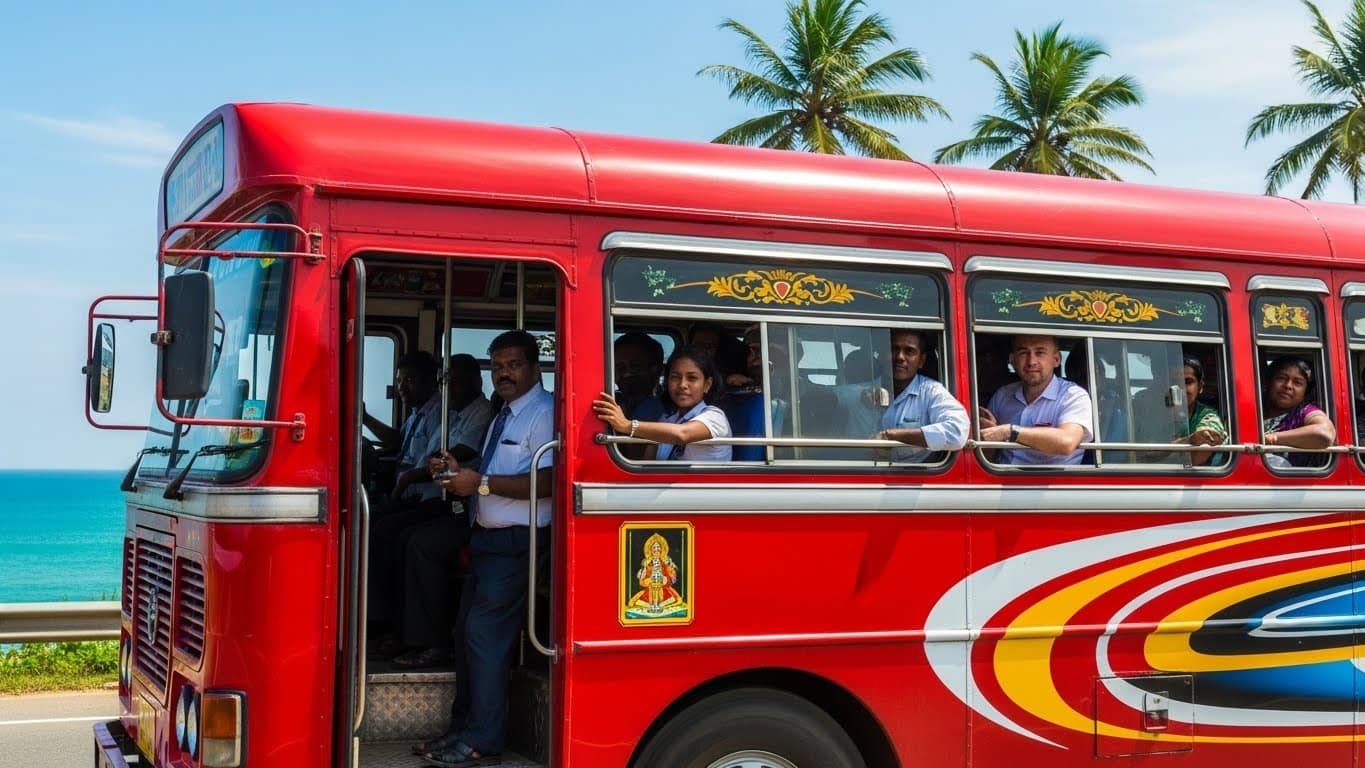
Buses reach every town on the island, leave frequently and cost very little. The red ones are government SLTB buses; private buses come in every colour.
- Normal buses: The cheapest option, from LKR 34 for short trips. Crowded, with open windows.
- AC intercity buses: Roughly twice the normal fare, fewer stops and more comfort. Colombo–Kandy costs about LKR 750 in 2026.
- Expressway buses: Fast AC coaches on the Southern Expressway. Makumbura (Colombo) to Galle costs LKR 930 and takes about 1.5 hours.
Pay the conductor in cash. Keep your valuables on you, not on the rack. On mountain roads, take a motion-sickness tablet before you board. Our bus guide covers routes, stations and etiquette.
Tuk-Tuks
Tuk-tuks are perfect for trips of up to about 15 km. The fair rate in 2026 is about LKR 110 for the first kilometre and LKR 90–100 per kilometre after that.
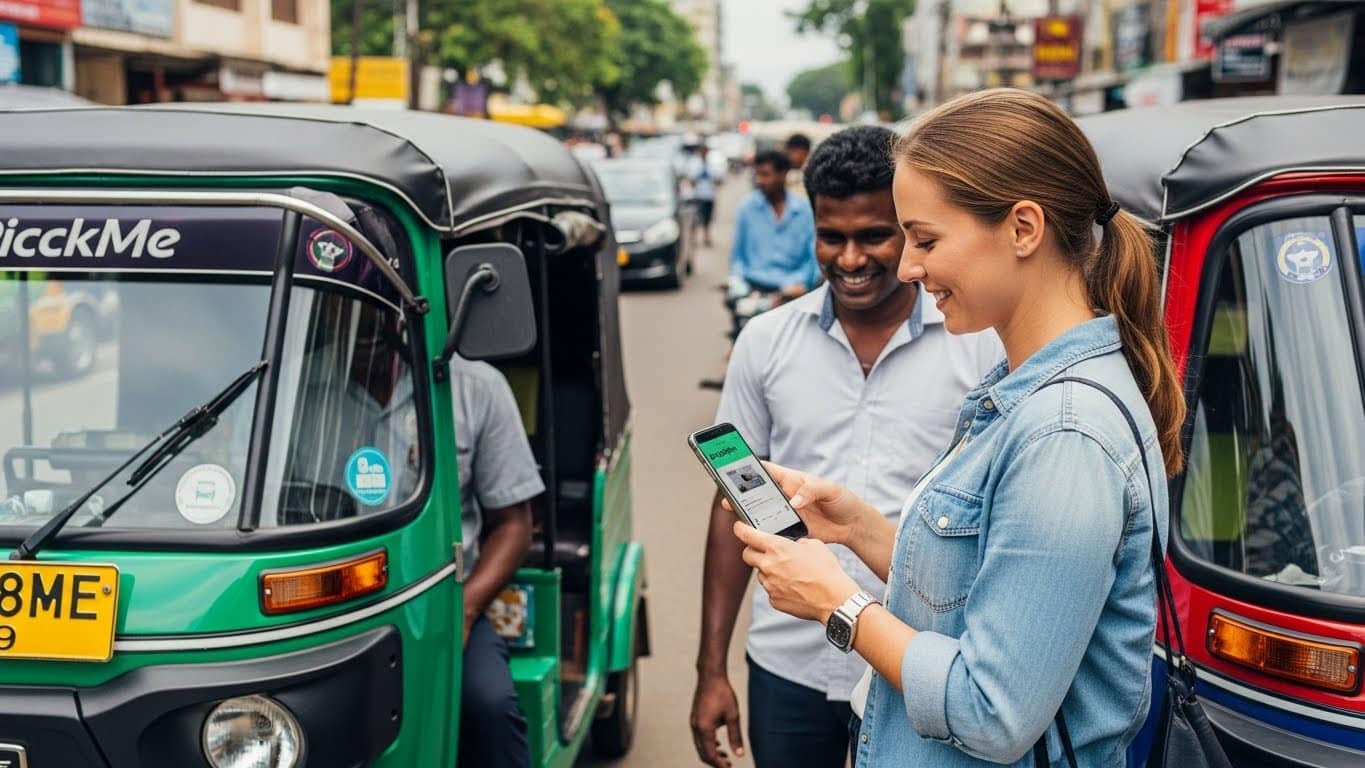
- Book on PickMe or Uber wherever they work. You see the price upfront and there's no haggling.
- On the street, agree on the total price (not "per person") before you get in, or ask for the meter.
- For a half or full day of sightseeing, LKR 4,000–8,000 is a typical range, depending on distance.
Full details are in our tuk-tuk price guide.
Car with a Driver
Hiring a car and driver is the most popular way for visitors to tour the island, and with the hill-country trains disrupted it's more useful than ever.
- Cost: Roughly US$50–90 per day for a car, more for a van. This usually includes fuel, tolls and the driver's food and lodging; confirm exactly what's included. Some quotes cap daily mileage (often 100–150 km) and charge extra beyond that.
- Why it works: Door-to-door travel, flexible stops, local knowledge, and no stress on the roads.
- Finding one: Ask your hotel, use a reputable tour company, or book a driver recommended in recent reviews. Agree on the itinerary and price in writing.
- Tips: Drivers often earn commission at shops and restaurants. It's fine to say you'd rather skip them. Tipping around LKR 1,000–2,000 per day is customary if you're happy with the service.
Domestic Flights
Cinnamon Air runs small planes and seaplanes between Colombo and places such as Sigiriya, Kandy, Nuwara Eliya, Koggala, Trincomalee, Batticaloa and Jaffna. Flights take 30–60 minutes instead of four to eight hours by road, but they're expensive, baggage allowances are small and schedules can change. Flights are worth considering if you're short on time, especially for the east coast or the north.
Renting a Car or Scooter
Self-driving is possible but not relaxing. Traffic is chaotic, buses dominate the road and night driving is risky.
- You'll need a local permit: a temporary licence from the Department of Motor Traffic (there's a counter at the airport) or an AA of Ceylon recognition permit, which requires a 1949-convention International Driving Permit.
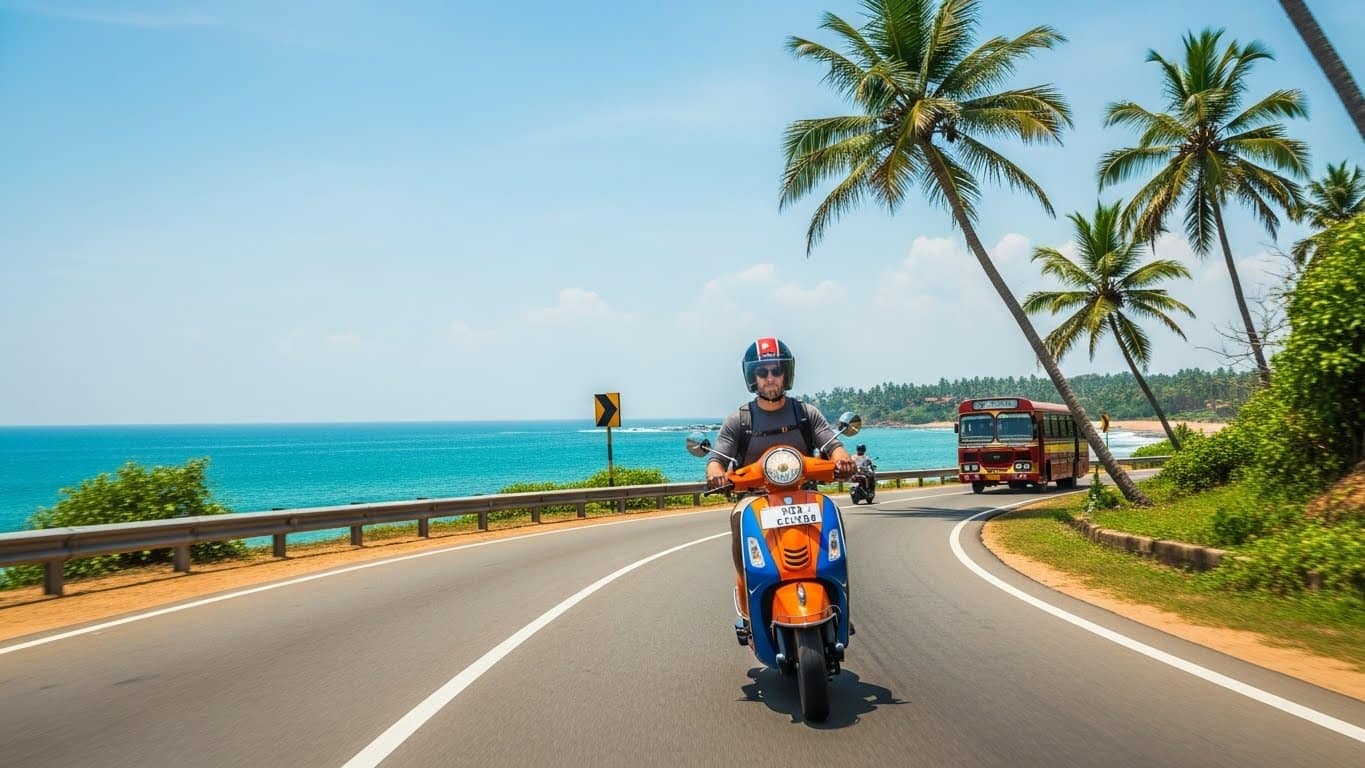
- Scooters are popular on the south coast (Weligama, Mirissa, Arugam Bay). Wear a helmet, and ride only if you're experienced.
- Tuk-tuk rental is a fun option for confident drivers, with the right permit.
See our rental and road rules guide before you book.
Travel Times Between Popular Stops
These times are by car, in normal traffic:
| Route | Time |
|---|---|
| Airport – Colombo | 45–60 min |
| Airport – Kandy | 3–3.5 hrs |
| Colombo – Galle (expressway) | 1.5–2 hrs |
| Kandy – Sigiriya | 2.5–3 hrs |
| Sigiriya – Polonnaruwa | 1–1.5 hrs |
| Kandy – Nuwara Eliya | 2.5–3 hrs |
| Nuwara Eliya – Ella | 2–2.5 hrs |
| Ella – Yala (Tissamaharama) | 2–2.5 hrs |
| Yala – Mirissa / Galle | 2.5–3.5 hrs |
| Colombo – Trincomalee | 5–6 hrs |
| Colombo – Jaffna | 7–8 hrs |
Rough rule: allow about an hour for every 40–50 km, and more in the hills.
A Classic Two-Week Route
- Negombo (night 1): Recover from the flight.
- Sigiriya/Dambulla (nights 2–4): Sigiriya Rock, Dambulla caves and Polonnaruwa, by car or bus plus tuk-tuk.
- Kandy (nights 5–6): The Temple of the Tooth and the botanical gardens.
- Nuwara Eliya (night 7): Tea estates, then the train from Nanu Oya to Ella (2026 route).
- Ella (nights 8–9): Little Adam's Peak, Nine Arch Bridge and Ella Rock.
- Yala/Udawalawe (night 10): A safari.
- South coast (nights 11–13): Mirissa, Weligama or Tangalle beaches.
- Galle (night 14): Galle Fort, then the expressway back to the airport (about 2.5 hours).
Swap the order between May and September, when the east coast (Trincomalee, Pasikudah, Arugam Bay) has the better weather. Our monsoon and packing guide explains why.
Staying Safe on the Move
- Use apps or hotel-arranged drivers at night.
- Keep your passport and phone on you on buses and trains.
- Wear a seatbelt where there is one, and a helmet on two wheels.
- Save 119 (police), 1990 (ambulance) and 1912 (tourist hotline).
Our transport safety guide goes into more detail.
FAQ
What's the best way to get around? For most visitors, a mix: a driver or buses for the long legs, the Nanu Oya–Ella train for scenery, and tuk-tuks in town.
Do I need to book trains in advance? For reserved seats on the scenic and coastal routes, yes. Book as early as you can.
Is Uber available? Yes, in Colombo and several other cities, but PickMe has wider coverage, especially for tuk-tuks.
How much should I budget for transport? Budget travellers using buses, trains and tuk-tuks can spend under US$10 a day; with a private driver, budget US$50–90 a day.
Final Tip
Leave room in your plans. Delays, rain and detours are part of travelling here, and so are the best surprises. The Sri Lanka Safe app helps you check fair tuk-tuk fares and travel times as you go.
Travel Sri Lanka with Sri Lanka Safe
Fair tuk-tuk prices, scam alerts, offline emergency contacts and AI trip planning, in one free app.