Money in Sri Lanka: ATMs, Cash, Cards and Tipping
How to pay your way in Sri Lanka: ATM fees and limits, where cards work, how much cash to carry, exchanging money safely, customs limits and how much to tip.
You'll need both cash and a card in Sri Lanka. Hotels, supermarkets and many cafes in tourist towns take cards, while street-hailed tuk-tuks, buses and roadside food stalls run on cash.
Sorting out money is easy once you know three things: which ATMs to use, what to say when a machine offers to charge you in your home currency, and why small notes matter.
The short version
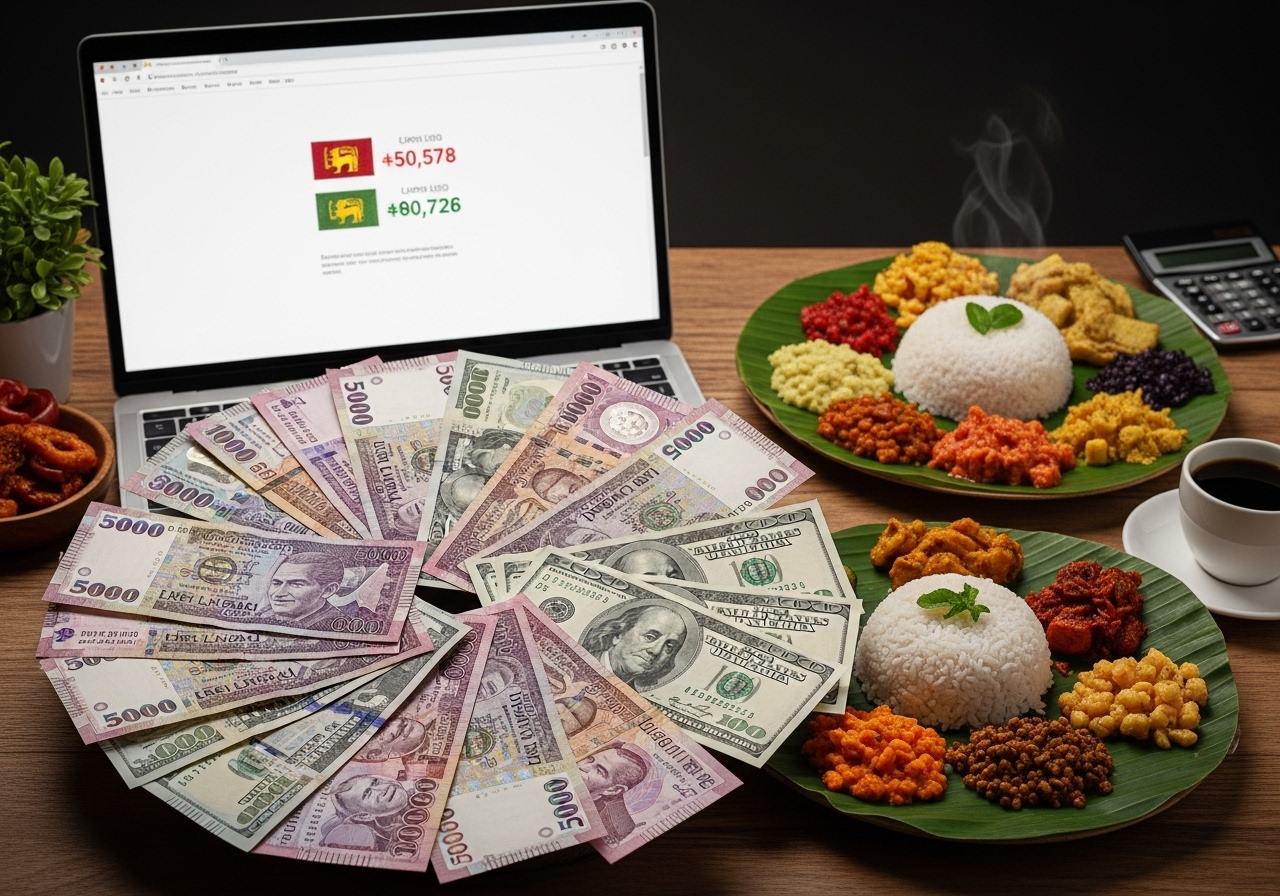
- Currency: Sri Lankan rupees (LKR or Rs). In October 2026, US$1 bought about LKR 331. Check a live rate before you go.
- Always pay in rupees. If an ATM or card machine offers your home currency, decline.
- Use ATMs inside or attached to banks, and carry a backup card.
- Keep small notes for tuk-tuks, buses and tips.
- Tip modestly. Check your bill first, as a 10% service charge is often already included.
ATMs
The UK government says most major banks allow Visa and Mastercard withdrawals, and that ATMs are found in major towns and cities. Not all of them accept foreign cards, so try another bank if one fails. Tell your bank you're travelling, and test your card early in the trip, in a town with several machines.
Fees and limits
These figures come from travel guides rather than bank fee schedules, and they vary. Treat them as a rough guide and read the screen before you confirm.
- Local ATM fee: Guides report very different figures, from about LKR 300–500 to LKR 400–1,000 per withdrawal. One goes as high as LKR 3,000.
- Withdrawal limit: Commonly about LKR 40,000–60,000 per transaction.
- Your home bank may add its own fee and exchange margin.
Because fees are usually flat, one large withdrawal generally costs less than several small ones. Just don't carry more than you're comfortable with, and leave the rest in your hotel safe.
Staying safe at the machine
- Use ATMs inside banks or hotels if you can, as the UK government advises.
- Check street machines for loose or added parts.
- Cover the keypad when you type your PIN.
- Check your statements or banking app regularly.
The one question that costs people money
ATMs and card machines may offer to charge you in dollars, pounds or euros instead of rupees. This is called dynamic currency conversion, and it can sound helpful. One guide puts the hidden markup at 4–7%.
Choose LKR every time, and look at the amount before you enter your PIN.
Where cards work
| Usually takes cards | Usually cash only |
|---|---|
| Hotels and resorts | Tuk-tuks hailed on the street |
| Supermarkets such as Keells, Cargills and Arpico | Public buses |
| Malls and upscale restaurants | Roadside food and small local shops |
| Many cafes in Mirissa, Weligama and similar towns | Expressway tolls |
- Visa and Mastercard are the safest choices. American Express is mainly accepted at higher-end hotels and restaurants, so don't rely on it.
- PickMe and Uber let you pay by card, which removes a common argument about change.
- Some guesthouses and tour operators may add 2.5–3.5% for card payments. Ask first.
- Keep your card in sight. The UK government warns that fraudsters can steal card details without you noticing.
How much cash to carry
For a typical day, a few thousand rupees is enough outside big purchases. One guide suggests taking out LKR 20,000–30,000 when you arrive at the airport, for SIMs, tolls and tuk-tuks. Our daily budget guide shows what things actually cost.
Break big notes when you can. A LKR 5,000 note can be hard for a driver or small shop to change, and "no change" is a common way of keeping the extra. Use large notes at supermarkets and hotels, and save your 100s, 500s and 1,000s for everywhere else.
Carry only what you need that day. Keep your backup card and spare cash in the hotel safe, and bring some US dollars or euros for emergencies.
Exchanging money
- Use banks, airport counters or licensed exchange bureaus.
- Bring clean, undamaged notes. US dollars, euros and pounds are the easiest to exchange.
- Count your money at the counter before you walk away.
- Never change money on the street. A great rate is the bait, and short-changing is the catch. Our scam guide explains how it works.
Customs limits
These are the amounts that need attention when you cross the border, according to Sri Lanka Customs and the official gazette:
| Situation | Rule |
|---|---|
| Bringing in foreign currency worth more than US$15,000 | Declare it and keep the receipt |
| Taking out foreign currency worth more than US$10,000 | Declare it |
| Taking out money you declared on arrival | Declare it, even if it's under US$15,000 |
| Carrying Sri Lankan rupees in or out | Limit of LKR 20,000 |
So spend or exchange your spare rupees before you leave. If you're carrying a large amount, check with Customs on 1915 or at customs.gov.lk first.
Tipping
Tipping isn't compulsory, but it's appreciated, and small amounts go a long way. Many restaurants and hotels add a 10% service charge, so check your bill before you add more. On smarter restaurant and hotel bills, service charge and VAT together can add about a quarter.
As a guide, one tipping guide suggests:
| Who | Suggested tip |
|---|---|
| Restaurant with no service charge | 5–10% |
| Small local eatery | LKR 100–150 |
| Housekeeping | LKR 200–300 a day |
| Porter | LKR 200–300 a bag |
| Tuk-tuk | Round up, or LKR 100–200 |
| Half-day guide or driver | LKR 500–1,000 per person |
| Safari guide or driver | LKR 1,000–2,500 per person a day |
| Massage therapist | LKR 500–1,000 |
Tip in rupees, directly to the person, and more if someone has really looked after you.
FAQ
Can I pay in US dollars in Sri Lanka?
Some hotels and tour operators quote or accept dollars, but rupees are what you'll use day to day. You'll generally get a better deal by paying in rupees.
Is it better to exchange money or use an ATM?
Both work. An ATM is usually the most convenient, while exchanging clean notes at a bank or licensed bureau avoids ATM fees. Having both options is safest, since not every ATM accepts every foreign card.
Can I use LankaQR or local payment apps as a tourist?
You'll see LankaQR signs in many shops, but it's designed around local apps and accounts. Don't count on it. Carry cash and a card instead.
What should I do if my card is swallowed or stolen?
Freeze the card in your banking app and call your bank straight away. If it's stolen, report it to the police and ask for a report for your insurance claim. Our emergency guide has a full checklist.
The Sri Lanka Safe app includes a currency converter and budget tracking, so you can check a price before you pay.
Sources
- UK government: Sri Lanka entry requirements and money
- UK government: safety and security advice
- Sri Lanka Customs: passenger rules
- Sri Lanka Government Gazette 2213/39: foreign exchange rules, 2021
- Sri Lanka Government Gazette 2182/33: rupee limit, 2020
- Japan Ministry of Foreign Affairs: Sri Lanka entry information
- Lanka Raj: ATM fees in Sri Lanka, 2026
- Reservations.lk: prices and exchange rate, October 2026
- My Ceylon Travels: cash vs card in Sri Lanka, 2026
- The Wandering Life: tipping in Sri Lanka
- The Sri Lankan Guideline: currency guide
Travel Sri Lanka with Sri Lanka Safe
Fair tuk-tuk prices, scam alerts, offline emergency contacts and AI trip planning, in one free app.