Whale Watching in Mirissa: Season, Price and Ethical Boats
Planning a Mirissa whale-watching trip? When to go, 2026 prices, your real chances of seeing a blue whale, how to choose a responsible boat and how to handle seasickness.
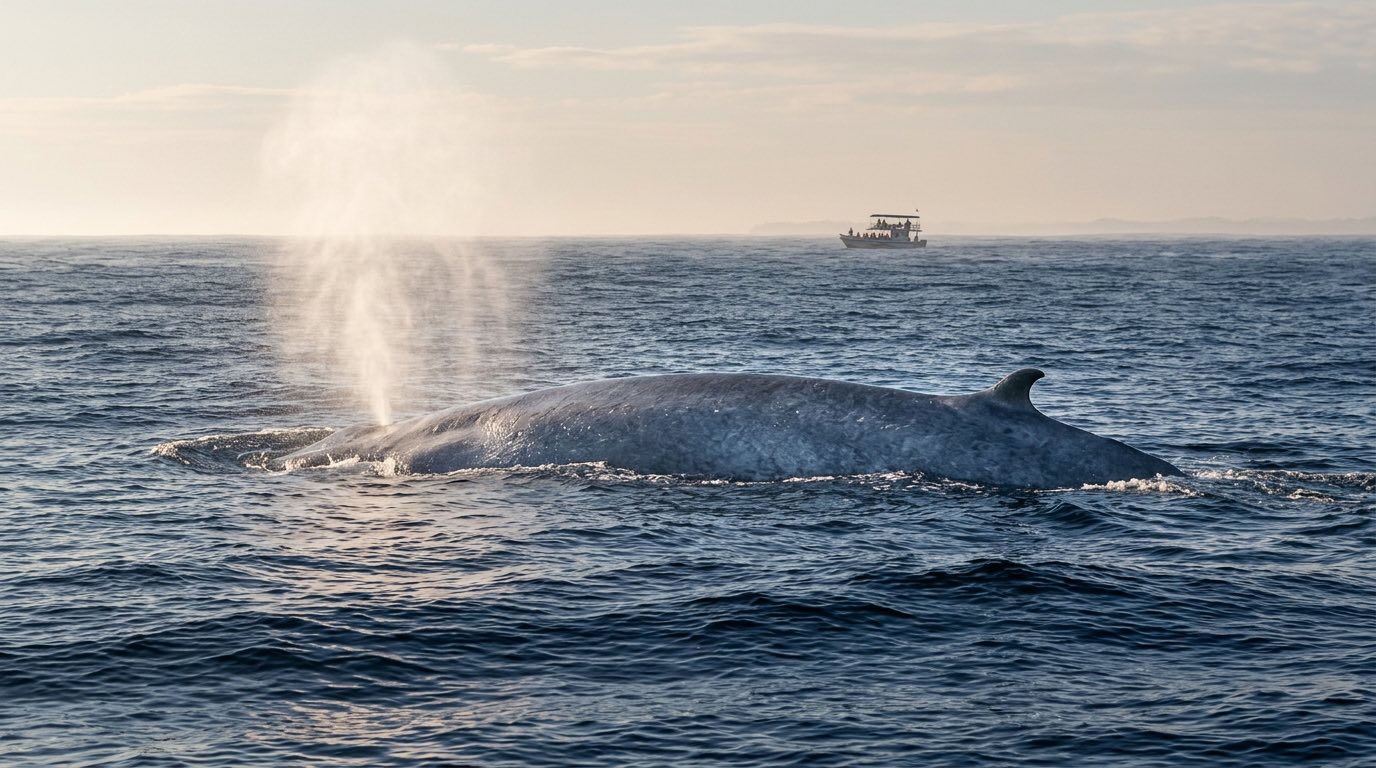
Seeing a blue whale surface off Sri Lanka's south coast is a once-in-a-lifetime moment. It can also mean a 6am start, hours on a rolling boat, and a crowd of other boats around one whale.
A good trip comes down to timing, realistic expectations and choosing an operator that doesn't chase animals.
The short version
- Best time for Mirissa: December to March.
- Expect to pay: About LKR 8,000–20,000 per adult, depending on the boat and what's included.
- Sightings aren't guaranteed. Be wary of anyone who says they are.
- Choose a boat that limits passengers and talks about keeping its distance.
- Take seasickness tablets before you board, not after you start feeling ill.
When to go
| Departure point | Calmer season | Avoid |
|---|---|---|
| Mirissa (south) | About November or December to April | May to July, with rougher seas until October |
| Trincomalee (east) | About May to October | November to January |
| Kalpitiya (west) | About November to April | May to September |
Blue whales are most often seen off Mirissa from December to March. One well-known operator, Raja and the Whales, runs from November to late April or early May, and in August to October only if the weather allows. It doesn't run at all in May, June or July.
Check the forecast on the day. Our weather guide explains which coast is calm in which month.
How much it costs
Prices vary widely, so compare what's included as well as the price.
| Option | Reported price |
|---|---|
| Shared boat, Mirissa | About LKR 8,000–16,000 per person |
| Booked online through a tour site | About €50 per person |
| Raja and the Whales, adult (12+) | LKR 20,000 |
| Raja and the Whales, child (5–11) | LKR 10,000 |
Ask whether government fees are included. Raja's price includes them, along with pickup in the Mirissa area and breakfast. Another operator lists a separate wildlife fee of US$19.50 per adult, which changes the comparison considerably.
Your real chances
No honest operator can promise you a whale. Raja and the Whales gives its own figures as roughly a 50% chance of seeing whales and about 20% for blue whales. Treat any much higher claim with caution.
You may well see dolphins, flying fish and turtles anyway. Go for the experience of being out at sea, and consider any whale a bonus.
How to choose a responsible boat
Whale watching around Mirissa has a crowding problem. One guide reports that as many as 10–25 boats can gather around one whale in peak season. Noise, speed and boats blocking a whale's path can all stress the animals.
The rules
Sri Lanka has marine mammal regulations dating from 2012. Reports of what they require differ, and we couldn't read the current text, so don't treat these as the exact law. Commonly reported guidelines include:
- Slow down on sighting a whale.
- Stop the engine or idle at about 100 metres.
- Don't approach head-on or cut across a whale's path.
- Don't feed, touch or swim with whales.
- Limit the number of boats around a single whale.
The International Whaling Commission's handbook has noted weak monitoring and enforcement, based on a 2016 study. So you can't assume that a boat follows the rules just because they exist.
Good signs
- It's open about how close it goes and how it approaches whales.
- It limits passenger numbers, and has a guide or naturalist on board.
- Reviews mention staff keeping their distance and cutting the engine.
- It carries enough life jackets for everyone and offers them without being asked.
Warning signs
- "Guaranteed sightings"
- Boats carrying 100 or more passengers
- Loud music or alcohol on board
- Offers to get in the water with whales
- The cheapest price on the harbour, with no explanation of what you're getting
If your boat races towards a whale or crowds it, say something and mention it in your review afterwards. Operators do read them.
What the day is like
- Check-in at about 6am, and leave at about 6:30am. Many operators offer pickup, so ask.
- Spend four to five hours at sea on average. Some trips last up to eight hours if the whales are far out.
- Don't expect to return early. Raja and the Whales says clearly that it won't go back to the harbour for seasickness, so don't book the trip on a day you have a tight connection or flight.
Dealing with seasickness
The Indian Ocean always has some swell, and plenty of people get sick.
- Take a tablet 1–2 hours before you board. One operator recommends Avomine, which it says is sold in pharmacies across Sri Lanka. Ask a pharmacist or your doctor what suits you.
- Eat a light meal and avoid alcohol the night before.
- Sit outside and low down, and look at the horizon.
- Avoid reading or looking at your phone.
What to bring
- Sunscreen, a hat and sunglasses with a strap
- A light waterproof layer, as it can be cold and wet at dawn
- Water, plus your seasickness tablets
- A dry bag for your phone and camera
- Cash or a card for the balance
Check that your travel insurance covers boat trips, particularly if you have a medical condition. If you're pregnant, have back problems or have young children, ask the operator whether the trip is suitable, as boats can pitch hard in swell.
FAQ
Is Mirissa or Trincomalee better for whale watching?
It depends on when you travel. Mirissa suits the December to March dry season on the south coast, when you can also enjoy its beaches. Trincomalee is the choice from about May to October.
Can I swim with whales in Sri Lanka?
No. Reports say it's prohibited, and it's dangerous for you and stressful for the whales. Avoid any operator who offers it.
Do I get a refund if we don't see a whale?
Don't assume so. Policies vary, so ask before you pay.
Is it suitable for children?
Older children who cope well on boats usually do fine. For young children, a long trip in open water can be tough, especially since boats may not return early. Ask about life jackets in your child's size.
Can I see whales from the shore?
Don't plan on it. Whales are usually a long way offshore, and you'll need a boat for a realistic chance.
Staying around Mirissa? Read our south coast beach guide and beach safety guide. You can also add your trip to the AI planner in the Sri Lanka Safe app.
Sources
- International Whaling Commission: Sri Lanka whale-watching profile
- Raja and the Whales: trips, prices and seasons
- Pixidia: Mirissa season, fares and regulations, October 2026
- Sri Lanka Spirit: ethical whale watching
- Whale Watching Club: prices and wildlife fee
- Kate and Mike's Travels: whale watching in Sri Lanka, 2026
Travel Sri Lanka with Sri Lanka Safe
Fair tuk-tuk prices, scam alerts, offline emergency contacts and AI trip planning, in one free app.